The space race: The Moon photos
Episode of the series Look Closer
- Illustrated slideshow (52 images)
- Glossary (17 words)
- Comprehension quiz (10 questions)
- 9 cultural notes
 Extract · 30 s
The episode
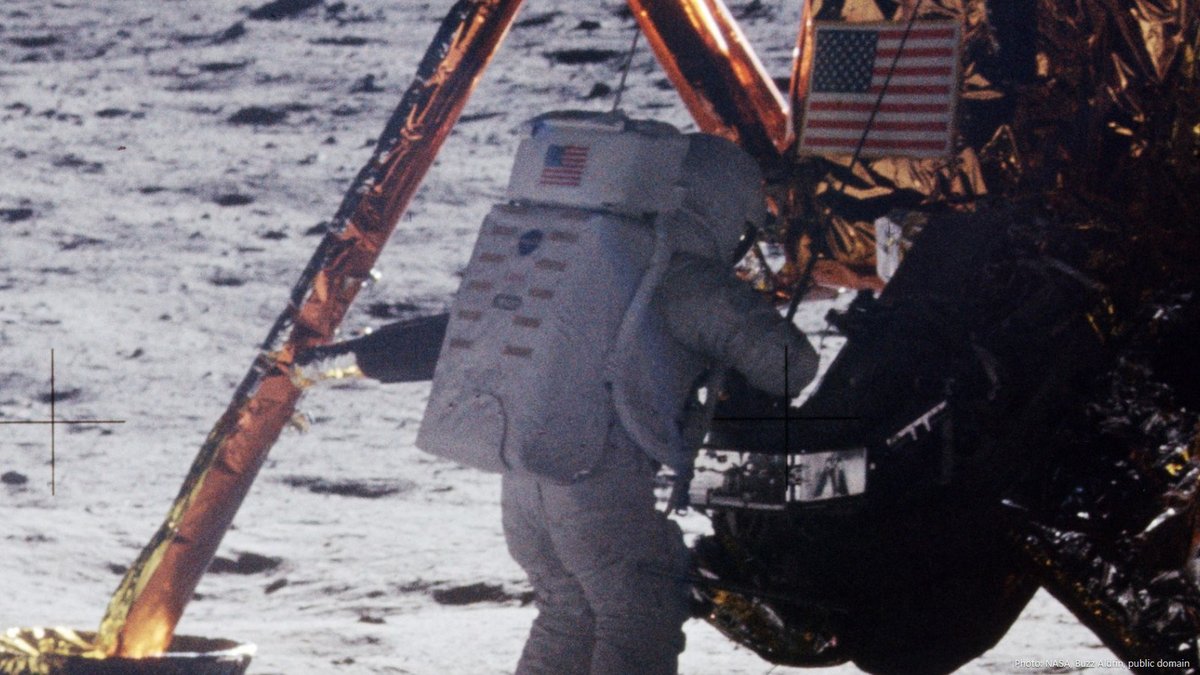
Some people say the Apollo 11 Moon photos are fake, so this episode looks closer at the flag that seems to wave, the black sky with no stars and a sharp bootprint.
Episode worksheets (2)
- Student sheet In your teacher account
- Teacher sheet In your teacher account
Teaching guide
Objective & content
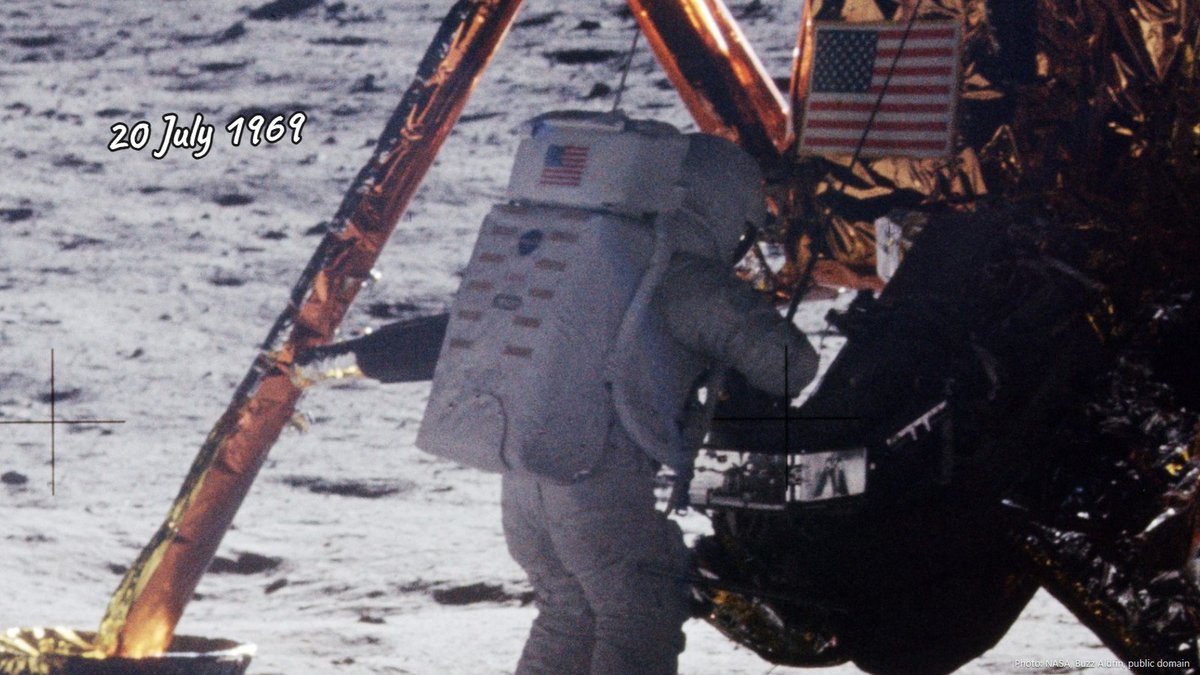
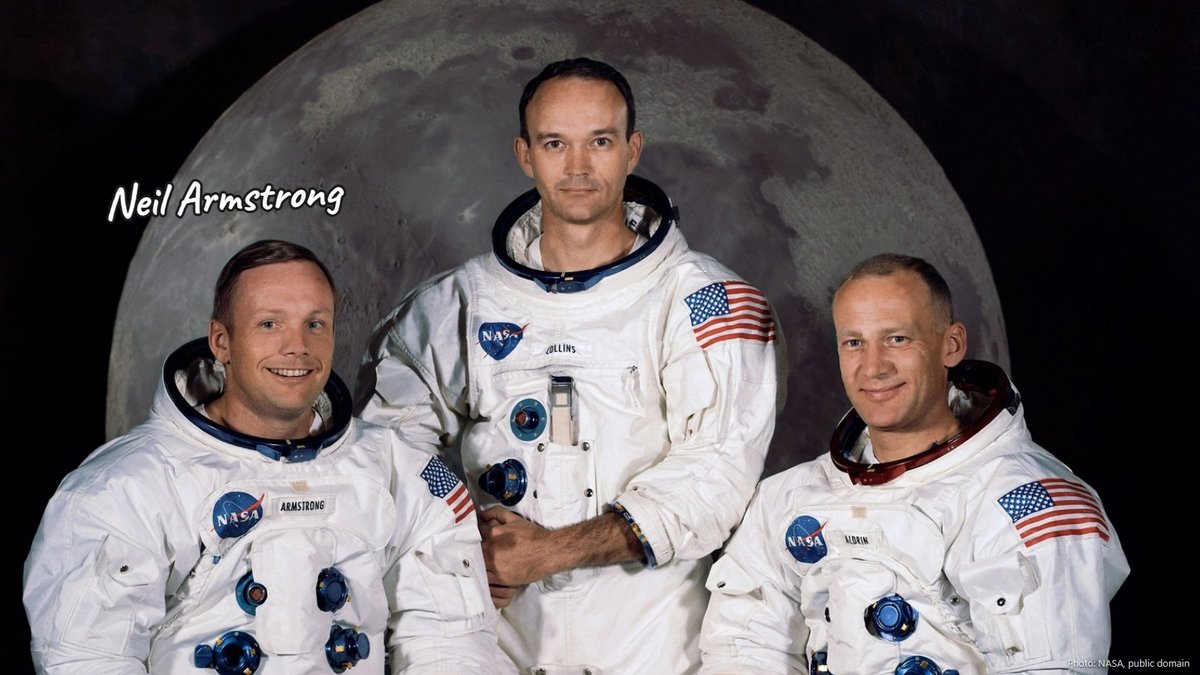
This Look Closer episode (Space race mini-series, episode 162) is a short documentary that checks the photos of the first Moon landing. On 20 July 1969, Neil Armstrong and Buzz Aldrin walked on the Moon and took hundreds of photos, and today some people say these photos are fake. The episode looks at three of them. First, the flag seems to wave, but there is no air and so no wind on the Moon: a metal rod along its top held it out, and because the astronauts could not open the rod completely, the flag stayed wrinkled. Second, the sky is black with no stars, because the sunlit ground and the white spacesuits were very bright, so the cameras took each photo very fast and the faint stars did not appear; learners can test this from a street with bright lights. Third, a bootprint is sharp because the Moon is covered in fine grey dust, and with no wind and no rain the footprints are probably still there. It ends with the 382 kilograms of Moon rock the Apollo astronauts brought back, which scientists in many countries have studied. The narration is in the present simple and the past simple, with could not (The astronauts could not open the rod completely), one present perfect (Scientists in many countries have studied it) and a closing question with a superlative (Which proof do you find the most convincing?); no grammar point is taught. It is a listening comprehension episode: learners listen, then answer the 10 questions in the app: 7 on facts and 3 on vocabulary (rod, dust, faint).
Materials & prerequisites
The folder holds the audio, the slideshow and the script; there is no lesson plan. The pupil pack and the teacher pack (answers highlighted) are one A4 page each, with the text, three NASA photos (Buzz Aldrin beside the flag, the lunar module under a black sky, Aldrin's bootprint), the key words and the 10 questions; a pupil sheet and a teacher sheet with the answer key come with them. The text ends with an open question (Which proof do you find the most convincing?). Learners should know the past simple of common verbs and be able to give a reason with because and so. The script explains its harder words as it goes (rod, dust, faint).
Curriculum alignment
Tagged c4-school-and-society ("École et société") and c4-encountering-others ("Rencontre avec l'autre"), Cycle 4 (3e). The episode targets CEFR level B1-.
Possible adaptations
- Lower levels: Offer segmented listening and additional visual aids.
- Advanced levels: Encourage an oral summary and a debate in English on the theme.
- Large groups: Organise group work with differentiated roles.
🔒 Restricted content
This resource requires a subscription to be viewed.
Unlock the resourceIncluded in the subscriptionTags
- Present simple
- Past simple: regular verbs
- Past simple: irregular verbs
- Present perfect simple
- Modals in the past
- There is / there are
- Superlatives
- Logical connectors
- Space exploration
- Historical dates
- Famous people
- Art & photography
- Weather
- Famous explorers
- School and society
- Encountering others
- Listening comprehension
- Vocabulary building
- Cultural awareness
- Giving opinions