New Orleans: The Mardi Gras Indians
Episode of the series Look Closer
- Illustrated slideshow (65 images)
- Glossary (18 words)
- Comprehension quiz (10 questions)
- 9 cultural notes
 Extract · 30 s
The episode
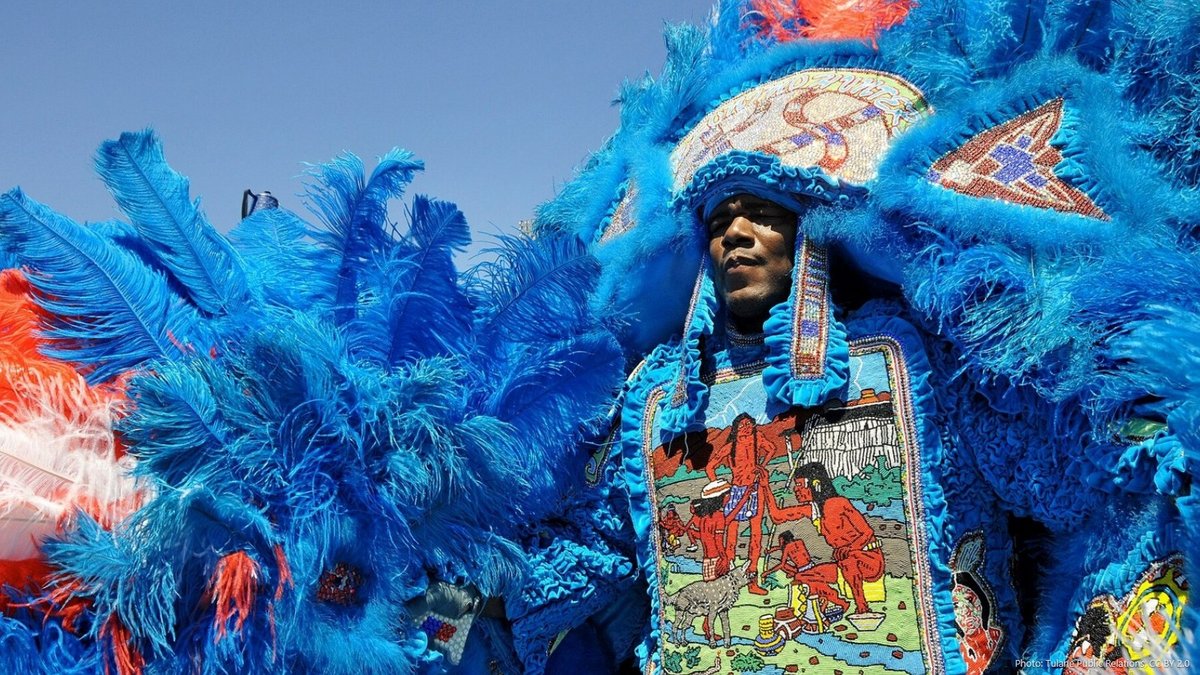
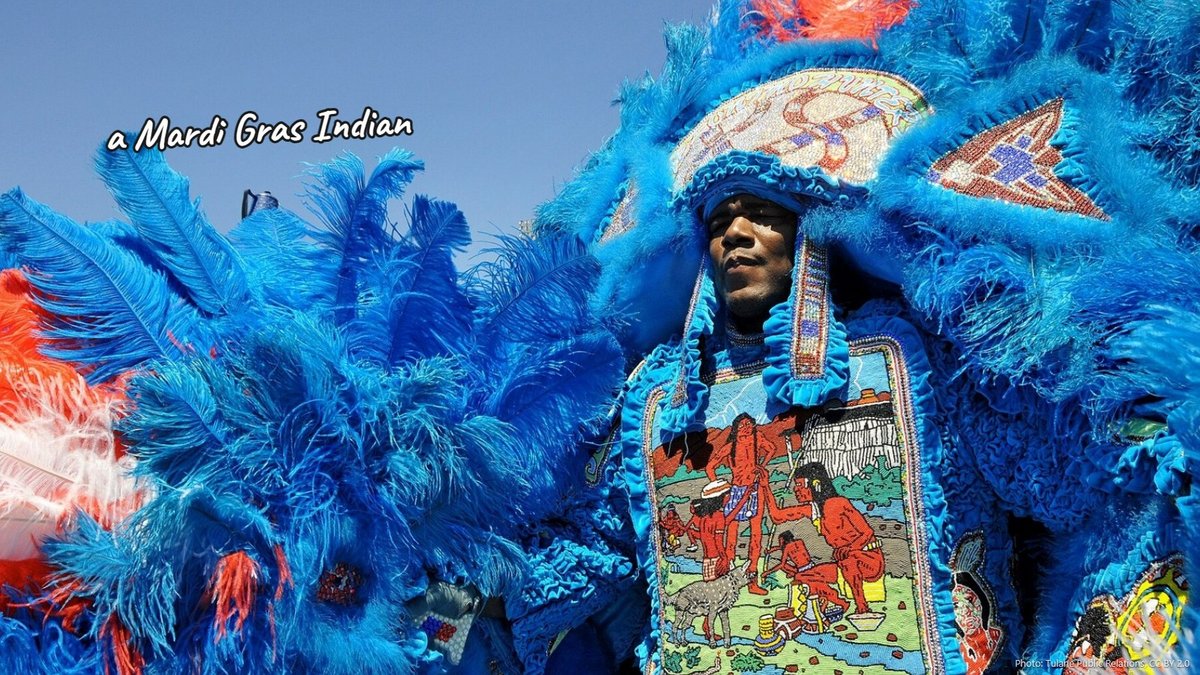
Every year, the Mardi Gras Indians of New Orleans sew a new suit by hand, covered in feathers and tiny beads that make pictures.
Episode worksheets (2)
- Student sheet In your teacher account
- Teacher sheet In your teacher account
Teaching guide
Objective & content
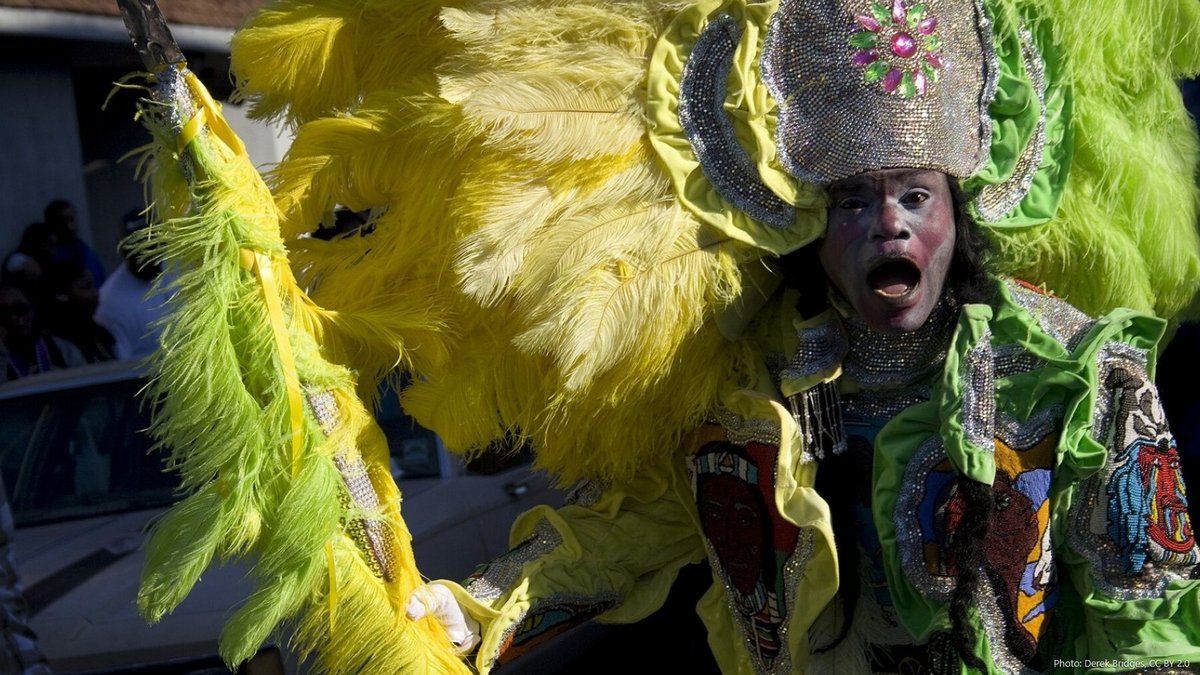
This Look Closer episode (New Orleans jazz mini-series, episode 213) is a short documentary about the Mardi Gras Indians, also called Black Masking Indians, groups of Black people from New Orleans. It opens on a suit covered in feathers and thousands of tiny beads, bright from head to foot, and explains that each group is called a gang or a tribe, led by a Big Chief. The tradition is more than 140 years old: one of the first gangs, the Creole Wild West, started in the 1880s, and many people say the suits honour Native Americans, who helped Black people to escape from slavery long ago. Each person makes a new suit every year and never wears the same suit twice; it is sewn by hand, the work can take a whole year, and a finished suit can weigh more than forty kilos. The episode then looks closer at the front of a suit, where the beads make pictures that tell a story: a battle, an animal or a scene from history. The Indians come out on special days like Mardi Gras, the big carnival day in February or March, and walk through their neighbourhood, singing and chanting to drums and tambourines. When two gangs meet, the Big Chiefs face each other; these meetings were sometimes violent long ago, and today they are a competition of beauty.
The narration is in the present simple, with passives (is covered in feathers, is sewn by hand), a relative clause (Native Americans, who helped Black people), can (can take a whole year, can weigh) and the past simple for the history (started in the 1880s); no grammar point is taught. It is a listening comprehension episode: learners listen, then answer the 10 questions in the app: 7 on facts and 3 on vocabulary (Big Chief, gang, Mardi Gras). The closing question (Why do you think they make a new suit every year?) opens a short class discussion about traditions, pride and craft.
Materials & prerequisites
The folder holds the audio, the slideshow and the script; there is no lesson plan. The pupil pack and the teacher pack (answers highlighted) are one A4 page each, with the text, three photos (a Mardi Gras Indian in a blue feather suit with a large beaded patch on the front, a man wearing a suit whose front is one big beaded picture, two Indians in green and in orange and blue facing each other), the key words and the 10 questions. The folder also holds a one-page pupil sheet with the 10 questions and a teacher sheet with the answer key. Learners should know the present simple and the past simple of common verbs and be able to read dates and numbers. The script explains its new words as it goes (Mardi Gras Indians, gang, tribe, Big Chief, Mardi Gras).
Curriculum alignment
Tagged c4-languages-and-communication ("Langages") and c4-encountering-others ("Rencontres avec d'autres cultures"), Cycle 4 (3e). The episode targets CEFR level B1-.
Possible adaptations
- Lower levels: Offer segmented listening and additional visual aids.
- Advanced levels: Encourage an oral summary and a debate in English on the theme.
- Large groups: Organise group work with differentiated roles.
🔒 Restricted content
This resource requires a subscription to be viewed.
Unlock the resourceIncluded in the subscriptionTags
- Present simple
- Passive voice basics
- Past simple: regular verbs
- Past simple: irregular verbs
- Relative clauses
- Can: ability
- Clothes
- Music basics
- Birthdays & parties
- Historical dates
- US states
- Mardi Gras
- Languages and communication
- Encountering others
- Listening comprehension
- Vocabulary building
- Cultural awareness
- Exploring America
- Seasons & festivals
- Identity & creativity
- Places & Journeys
- Everyday Life
- Being Yourself