Shakespeare's Globe: Boy actors
Episode of the series Look Closer
- Illustrated slideshow (39 images)
- Glossary (18 words)
- Comprehension quiz (10 questions)
- 6 cultural notes
 Extract · 30 s
The episode
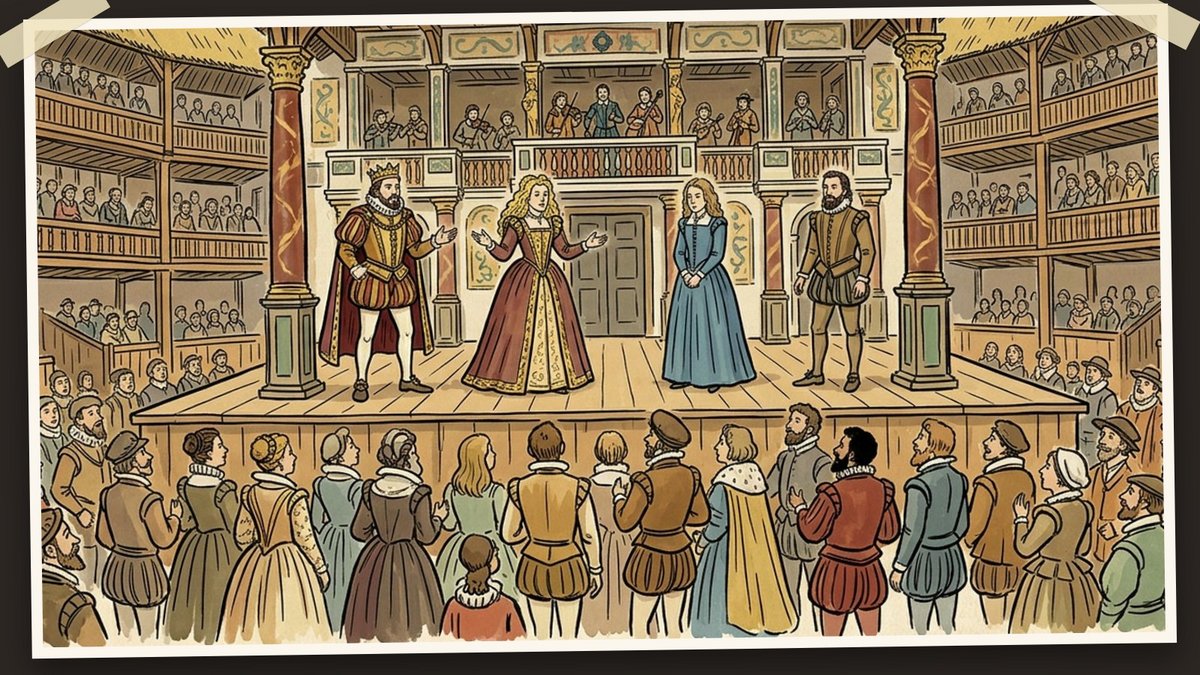
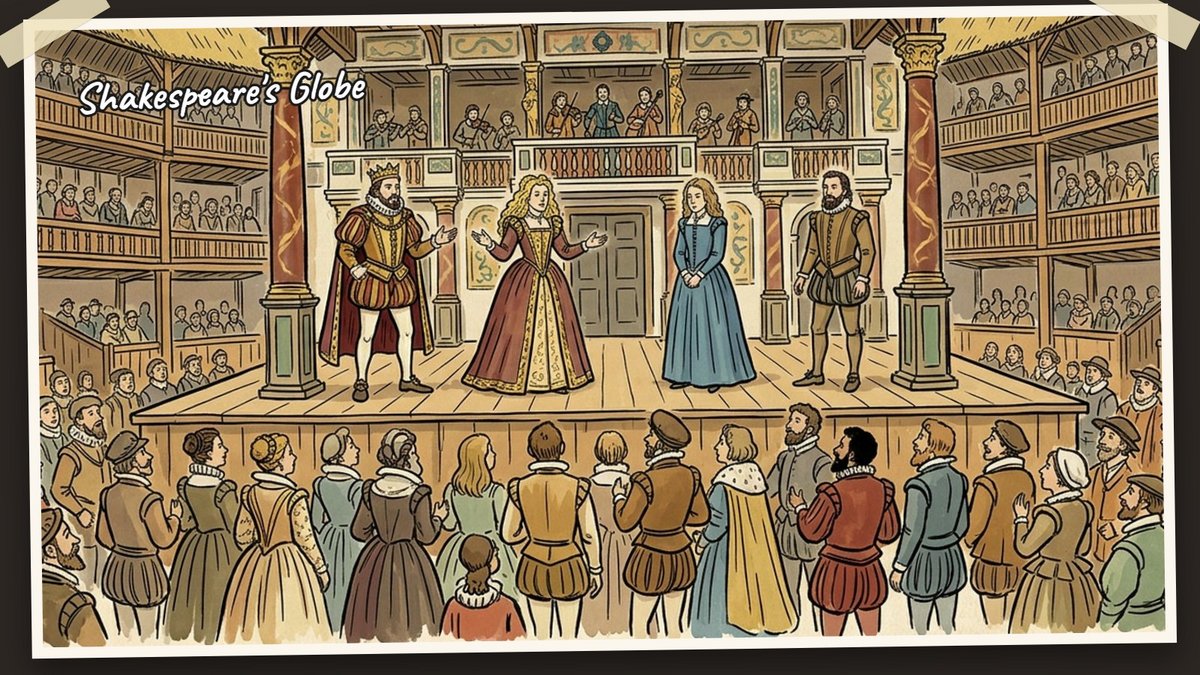
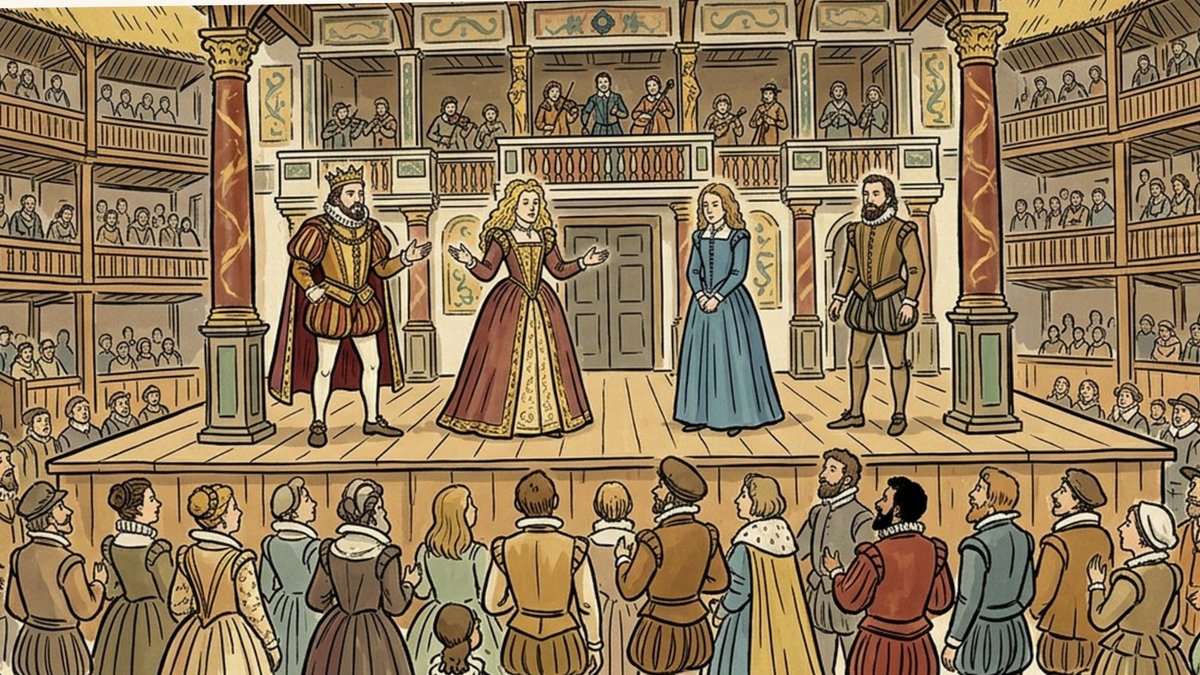
In Shakespeare's time, women could not act on the public stage, so boys played the women's parts, in long dresses, wigs and make-up.
Episode worksheets (2)
- Student sheet In your teacher account
- Teacher sheet In your teacher account
Teaching guide
Objective & content
This Look Closer episode (Shakespeare's Globe mini-series, episode 238) is a short documentary about the boy actors of Shakespeare's time. A narrator opens on a play at the Globe and asks the viewer to look closer at the women on the stage: they are not women at all. Women were not allowed to act in public theatres in England, so all the actors were men and the women's parts were played by boys, often teenagers, whose voices were still high and who had no beards yet. A boy joined a company of actors, lived with an older actor and learned to walk, speak and dance like a lady. He wore long dresses, wigs and make-up, and costumes were among the most valuable things the company had. Shakespeare wrote great parts for these boys, such as Cleopatra, Lady Macbeth, Rosalind and Viola, and in some plays a boy played a girl who pretended to be a boy. In 1660 women started to act on the English stage, and many people say the first was Margaret Hughes, as Desdemona in Othello. Today, the new Globe sometimes goes back to the old way, with men in all the parts, and sometimes does the opposite.
The narration uses the present simple and the past simple, with passives (were not allowed, were played); no grammar point is taught. Learners listen, then answer the 10 questions in the app: 7 on facts and 3 on vocabulary (company, part, valuable). The closing question (Why do you think the boys' high voices were important?) opens a short class discussion.
Materials & prerequisites
The folder holds the audio, the slideshow and the script; there is no lesson plan. The pupil pack and the teacher pack (answers highlighted) are one A4 page each, with the text, three pictures, the key words and the 10 questions. The folder also holds a one-page pupil sheet and a teacher sheet with the answer key. Learners should know the present simple and the past simple of common verbs. The script explains its new words as it goes.
Curriculum alignment
Tagged c4-languages-and-communication ("Langages") and c4-encountering-others ("Rencontres avec d'autres cultures"), Cycle 4. The episode targets CEFR level B1-.
Possible adaptations
- Lower levels: Offer segmented listening and additional visual aids.
- Advanced levels: Encourage an oral summary and a debate in English on the theme.
- Large groups: Organise group work with differentiated roles.
🔒 Restricted content
This resource requires a subscription to be viewed.
Unlock the resourceIncluded in the subscriptionTags
- Present simple
- Passive voice basics
- Past simple: regular verbs
- Past simple: irregular verbs
- Cultural outings
- Clothes
- Historical dates
- Famous people
- Shakespeare
- London
- Languages and communication
- Encountering others
- Listening comprehension
- Vocabulary building
- Cultural awareness
- Arts & media
- Exploring Britain
- Everyday Life
- Places & Journeys