California Gold Rush: Who got rich?
Episode of the series Look Closer
- Illustrated slideshow (36 images)
- Glossary (13 words)
- Comprehension quiz (10 questions)
- 6 cultural notes
 Extract · 30 s
The episode
During the California Gold Rush, most miners did not get rich: the people who sold them pans, shovels and food often did better.
Episode worksheets (2)
- Student sheet In your teacher account
- Teacher sheet In your teacher account
Teaching guide
Objective & content
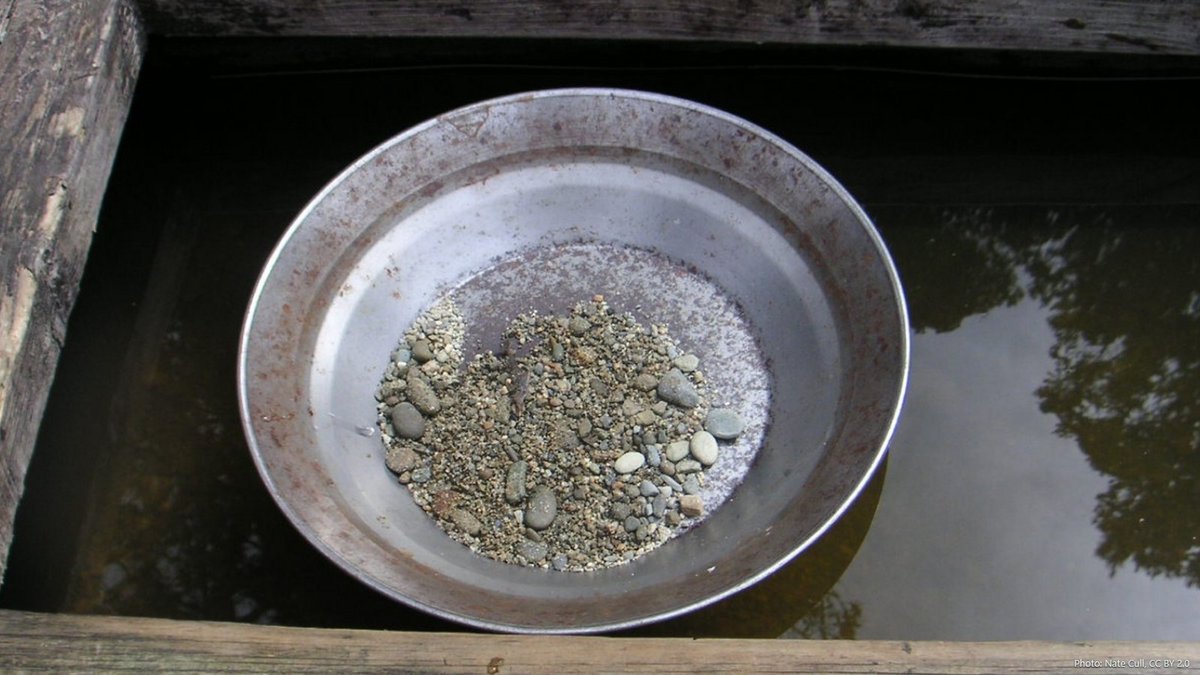
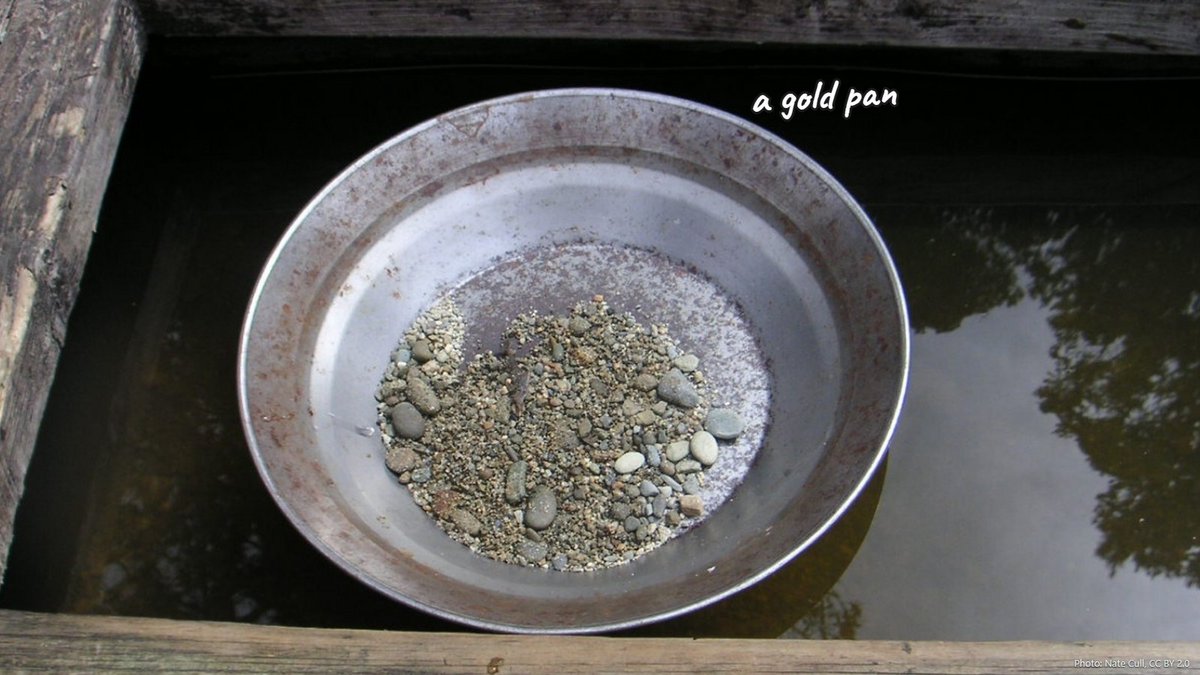
This Look Closer episode (California Gold Rush mini-series, episode 244) is a short documentary about who really got rich in the Gold Rush. It opens on a gold pan, a metal dish in which miners moved sand and water round and round so the heavy gold stayed at the bottom. Thousands of people came to California, but most of them did not get rich: finding gold was hard work, and food and tools were very expensive. In 1848 a shop owner, Sam Brannan, bought all the pans and shovels he could find, then walked through San Francisco with a bottle of gold, shouting the news. He bought pans for twenty cents and sold them for fifteen dollars each. In 1849 Luzena Wilson was cooking on her camp fire when a hungry miner offered her five dollars, then ten, for her biscuits, a kind of small bread; she understood that cooking could pay more than digging, and later she opened a hotel for the miners.
It is a listening comprehension episode in the past simple, with one past continuous (she was cooking ... when): learners listen, then answer the 10 questions in the app, 8 on facts and 2 on vocabulary (gold pan, biscuits). The closing question (Would you prefer to look for gold, or sell things to the miners?) opens a short class discussion about work, risk and money.
Materials & prerequisites
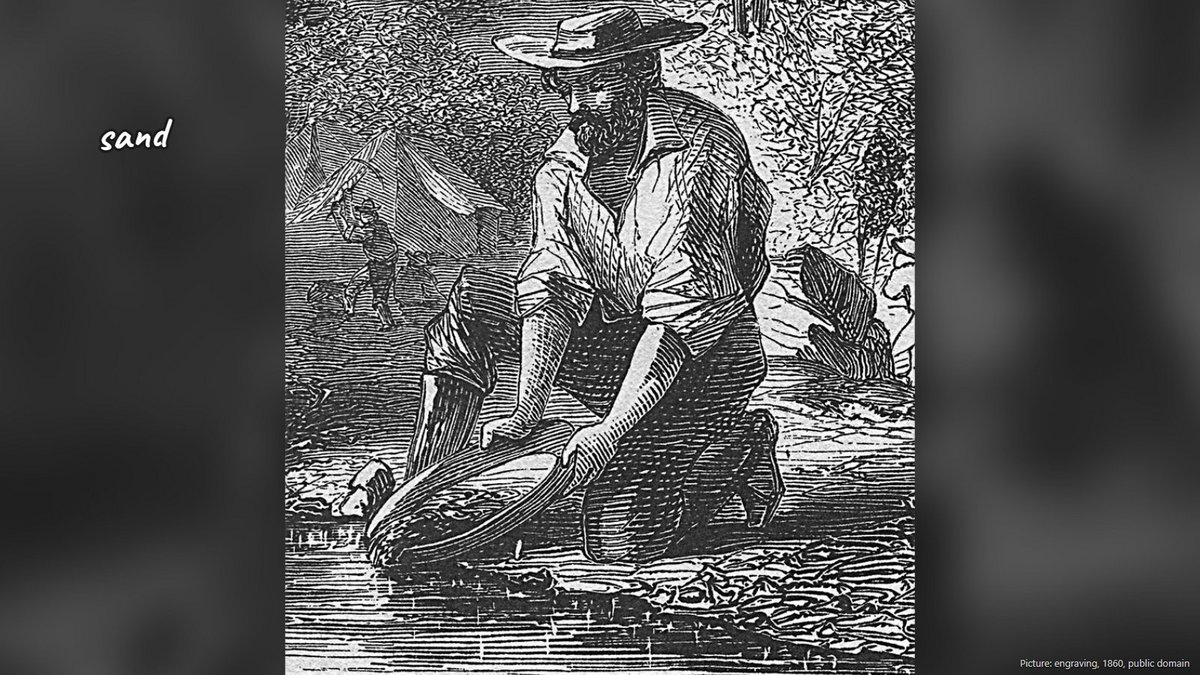
The folder holds the audio, the slideshow and the script; there is no lesson plan. The pupil pack and the teacher pack (answers highlighted) are one A4 page each, with the text, three pictures (an 1860 engraving of a miner panning, a portrait of Sam Brannan, a Nevada City street in about 1856), key words and the 10 questions; a one-page pupil sheet and a teacher sheet with the answer key are also included. Learners should know the past simple. The script explains its new words as it goes (gold pan, biscuits), and it gives the value of five dollars in 1849 in today's money.
Curriculum alignment
Tagged work-past-present-future ("Travailler hier, aujourd'hui, demain") and c4-travel-and-migration ("Voyages et migrations"), Cycle 4. The episode targets CEFR level B1-.
Possible adaptations
- Lower levels: Offer segmented listening and additional visual aids.
- Advanced levels: Encourage an oral summary and a debate in English on the theme.
- Large groups: Organise group work with differentiated roles.
🔒 Restricted content
This resource requires a subscription to be viewed.
Unlock the resourceIncluded in the subscriptionTags
- Past simple: regular verbs
- Past simple: irregular verbs
- Past continuous
- Business & work
- Money management
- Historical dates
- Food & drinks
- American Dream
- Work, yesterday, today and tomorrow
- Travel and migration
- Listening comprehension
- Vocabulary building
- Cultural awareness
- Modern history
- Exploring America
- Shopping & money
- Past & Progress
- Places & Journeys
- Everyday Life