New Orleans: The Musicians' Village
Episode of the series Look Closer
- Illustrated slideshow (44 images)
- Glossary (14 words)
- Comprehension quiz (10 questions)
- 9 cultural notes
 Extract · 30 s
The episode
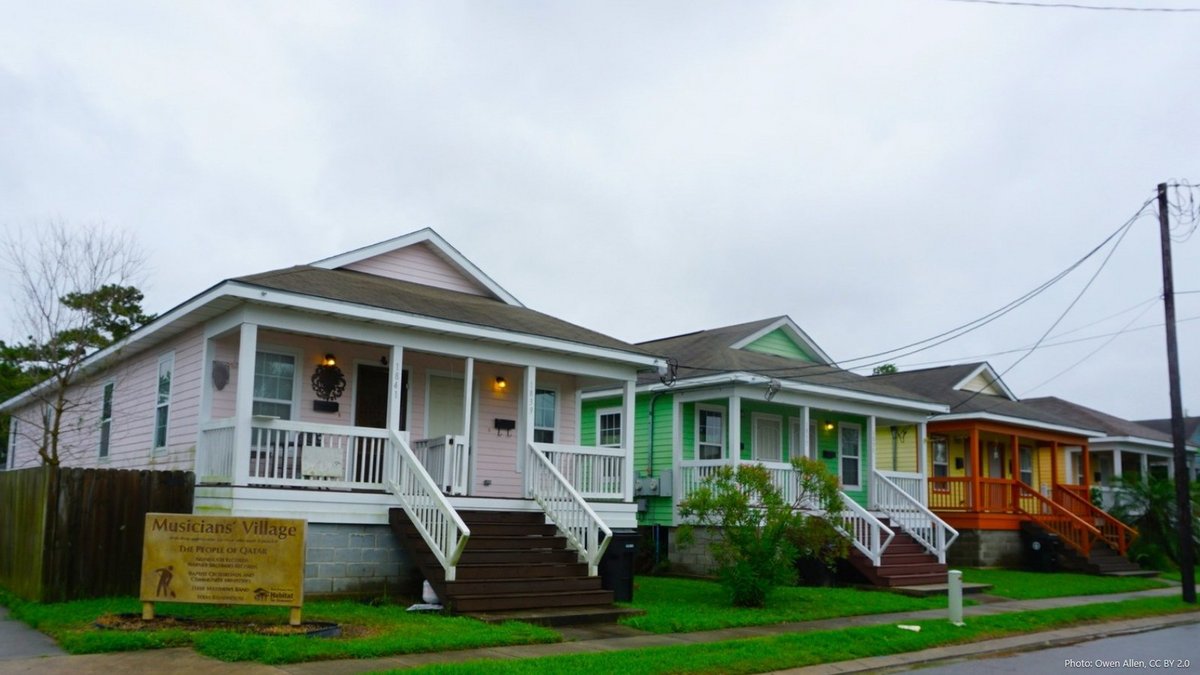
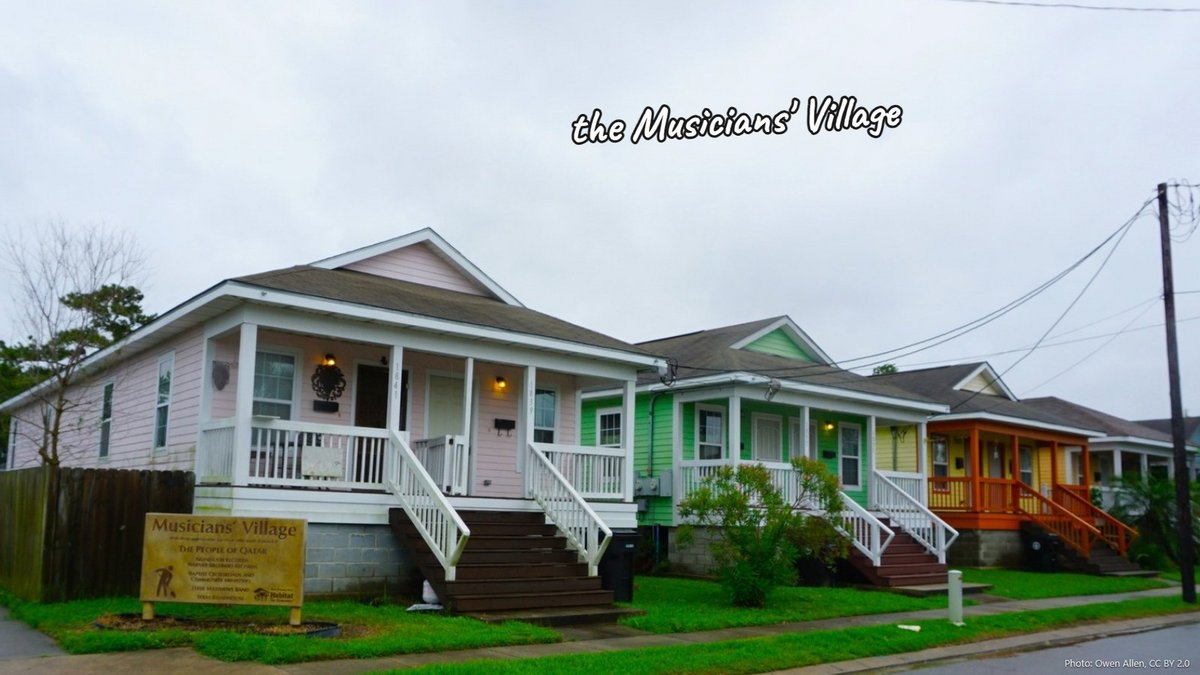
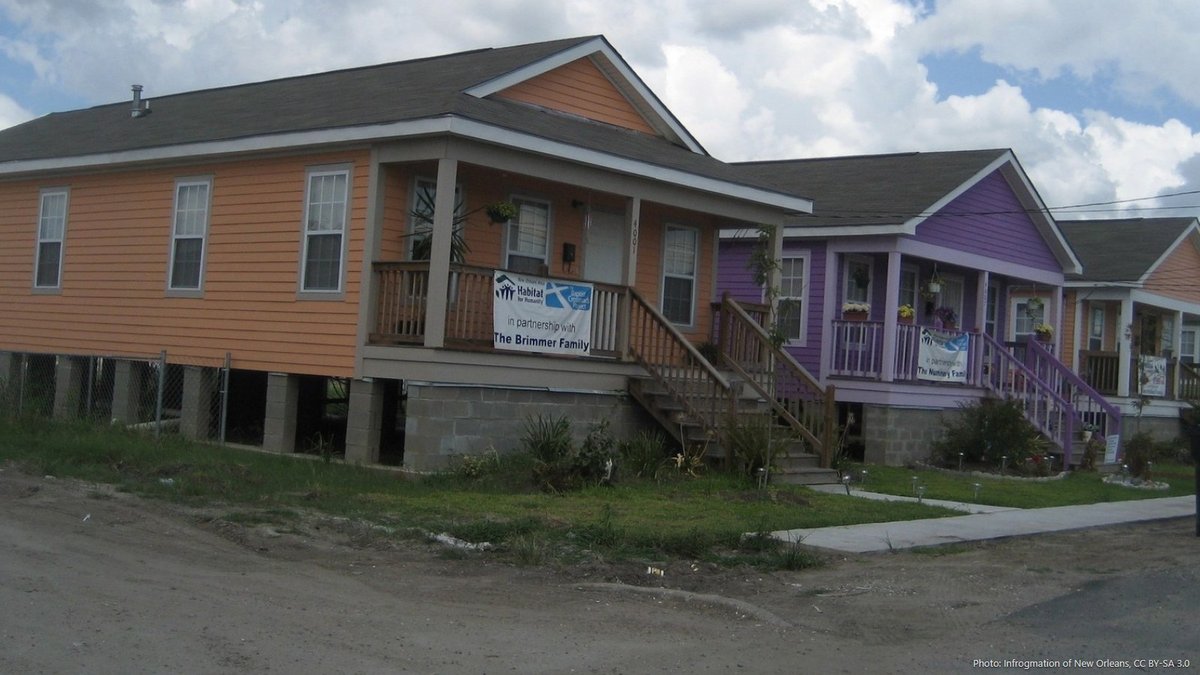
After the 2005 floods in New Orleans, two musicians and a charity created the Musicians' Village, a group of brightly painted homes with its own music centre.
Episode worksheets (2)
- Student sheet In your teacher account
- Teacher sheet In your teacher account
Teaching guide
Objective & content
This Look Closer episode (New Orleans: city of jazz mini-series, episode 214) is a short documentary about the Musicians' Village in New Orleans. It opens on the small houses of the village, painted in bright colours: yellow, pink, blue and green. In August 2005, Hurricane Katrina hit the city: the water broke through the walls that protected it, about 80 percent of New Orleans was flooded, and thousands of families lost their homes, many musicians among them. Many musicians had to leave, and people were afraid that the city would lose its music. So two musicians from New Orleans, Harry Connick Jr. and Branford Marsalis, had an idea: with a charity called Habitat for Humanity, they decided to build a whole village for musicians. Thousands of volunteers came to help and built the houses together with the families who were going to live in them, and the new owners worked on the building site too, for hundreds of hours. The village is in the Upper Ninth Ward and has more than 80 homes today, some of them built for older people. The episode then looks closer at the large building in the village, the Ellis Marsalis Center for Music, named after a famous jazz pianist and teacher, the father of Branford Marsalis: children come there to learn music, and there are concerts in its hall. The idea was simple: if the musicians can stay in New Orleans, the music stays too.
The narration is in the present simple for the village today and the past simple for the story (Many musicians had to leave the city, They built the houses), with relative clauses (the walls that protected the city, the families who were going to live in them), passives (are painted, was flooded, It is named after) and a zero conditional at the end (if the musicians can stay in New Orleans, the music stays too); no grammar point is taught. It is a listening comprehension episode: learners listen, then answer the 10 questions in the app: 7 on facts and 3 on vocabulary (the Musicians' Village, volunteers, flooded). The closing question (Why do you think the village has its own music centre?) opens a short class discussion about how a city keeps its music alive.
Materials & prerequisites
The folder holds the audio, the slideshow and the script; there is no lesson plan. The pupil pack and the teacher pack (answers highlighted) are one A4 page each, with the text, three photos (brightly painted houses of the Musicians' Village, young volunteers carrying a beam on the building site, the blue Ellis Marsalis Center for Music), the key words and the 10 questions. The folder also holds a one-page pupil sheet with the 10 questions and a teacher sheet with the answer key. Learners should know the present simple and the past simple of common verbs and be able to read dates and percentages. The script explains its new words as it goes (the Musicians' Village, the Upper Ninth Ward, the Ellis Marsalis Center for Music).
Curriculum alignment
Tagged c4-languages-and-communication ("Langages") and c4-encountering-others ("Rencontre avec l'autre"), Cycle 4 (3e). The episode targets CEFR level B1-.
Possible adaptations
- Lower levels: Offer segmented listening and additional visual aids.
- Advanced levels: Encourage an oral summary and a debate in English on the theme.
- Large groups: Organise group work with differentiated roles.
🔒 Restricted content
This resource requires a subscription to be viewed.
Unlock the resourceIncluded in the subscriptionTags
- Present simple
- Past simple: regular verbs
- Past simple: irregular verbs
- Passive voice basics
- Relative clauses
- Can: ability
- Conditionals 0 and 1
- Natural disasters
- Music basics
- Volunteering
- House & home
- Town & village
- Famous people
- Historical dates
- US states
- Languages and communication
- Encountering others
- Listening comprehension
- Vocabulary building
- Cultural awareness
- Exploring America
- Arts & media
- Modern history
- Places & Journeys
- Everyday Life
- Past & Progress