India: The Golden Temple kitchen
Episode of the series Look Closer
- Illustrated slideshow (58 images)
- Glossary (16 words)
- Comprehension quiz (10 questions)
- 9 cultural notes
 Extract · 30 s
The episode
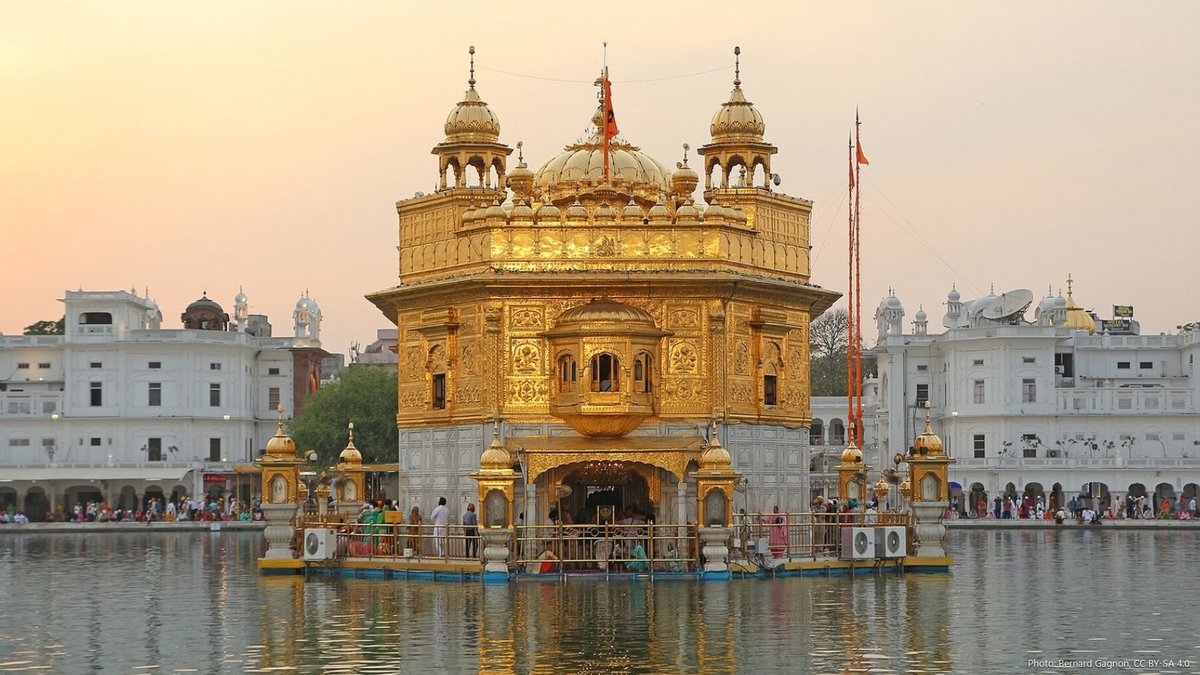
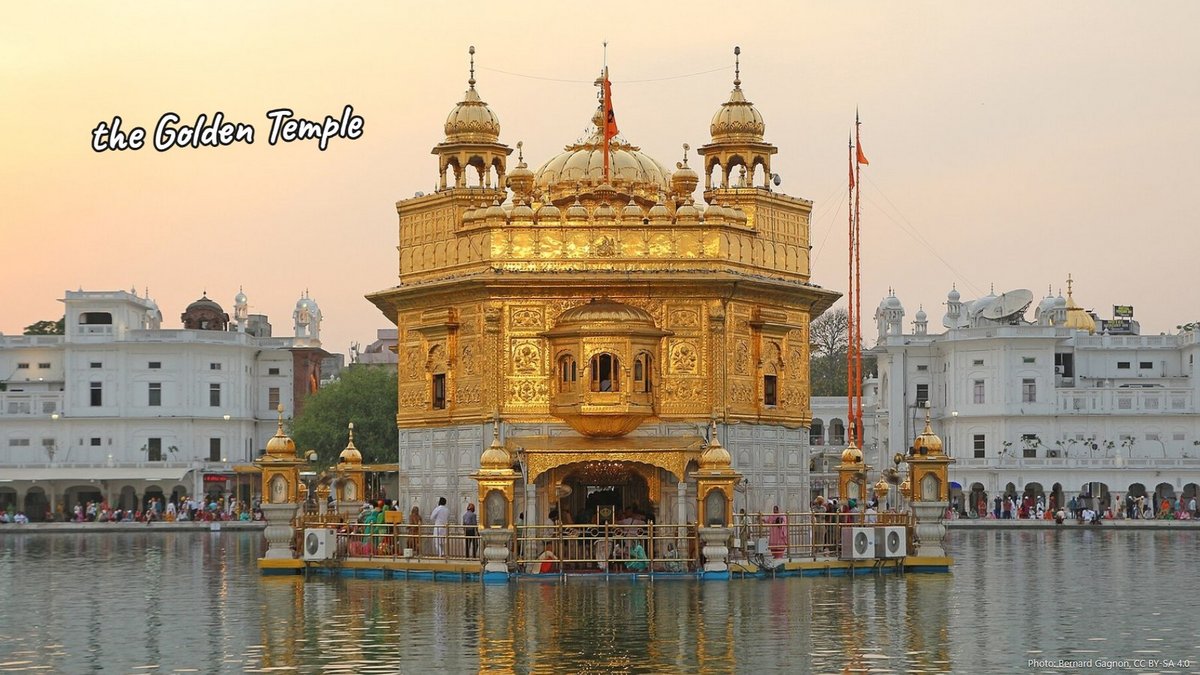
Next to the Golden Temple in Amritsar, a free kitchen called a langar serves meals to about 100,000 people a day, and everyone eats side by side on the floor.
Episode worksheets (2)
- Student sheet In your teacher account
- Teacher sheet In your teacher account
Teaching guide
Objective & content
This Look Closer episode (India: a feast of food mini-series, episode 191) is a short documentary about the free kitchen of the Golden Temple in Amritsar, in the north of India. It opens on the temple, the holiest place for Sikhs, the people who follow the Sikh religion. Next to it, a kitchen is open day and night and serves free meals to about 100,000 people every day, and even more on festival days. This free kitchen is called a langar. The idea comes from Guru Nanak, the first Sikh teacher, who lived more than 500 years ago, at a time when people from different groups, called castes, often did not eat together; in the langar, everyone was welcome at the same meal. It is still the same today: anyone can eat there, whatever their religion, nobody pays, and the kitchen runs on gifts of food and money from all over the world. The episode then looks closer at the dining hall: no tables and no chairs, everyone on the floor in long rows, side by side, eating the same simple vegetarian meal of lentils, rice and roti. Hundreds of volunteers peel onions, roll the dough, serve the food and wash about 300,000 plates and spoons a day, and on the busiest days a machine makes about 25,000 rotis an hour. The narration is mostly in the present simple, with the past simple for Guru Nanak's time, relative clauses (the people who follow the Sikh religion), a passive (This free kitchen is called a langar) and superlatives (the holiest place, the busiest days); no grammar point is taught. It is a listening comprehension episode: learners listen, then answer the 10 questions in the app: 7 on facts and 3 on vocabulary (langar, castes, roti).
Materials & prerequisites
The folder holds the audio, the slideshow and the script; there is no lesson plan. The pupil pack and the teacher pack (answers highlighted) are one A4 page each, with the text, three photos (the Golden Temple across its pool, the dining hall with people eating on the floor in long rows, women rolling dough and cooking rotis), the key words and the 10 questions; a pupil sheet and a teacher sheet with the answer key come with them. The text ends with an open question (Why do you think everyone sits on the floor in the same rows?). Learners should know the present simple and be able to understand large numbers. The script explains its new words as it goes (Sikhs, langar, castes, roti).
Curriculum alignment
Tagged c4-encountering-others ("Rencontre avec l'autre") and c4-school-and-society ("École et société"), Cycle 4 (3e). The episode targets CEFR level B1-.
Possible adaptations
- Lower levels: Offer segmented listening and additional visual aids.
- Advanced levels: Encourage an oral summary and a debate in English on the theme.
- Large groups: Organise group work with differentiated roles.
🔒 Restricted content
This resource requires a subscription to be viewed.
Unlock the resourceIncluded in the subscriptionTags
- Present simple
- Passive voice basics
- Relative clauses
- Past simple: regular verbs
- Past simple: was / were
- Can: ability
- Superlatives
- Food & drinks
- Meals
- Cooking verbs
- Volunteering
- Cultural differences
- Large numbers
- India
- Encountering others
- School and society
- Listening comprehension
- Vocabulary building
- Cultural awareness