Working lives: Child labour
Episode of the series Look Closer
- Illustrated slideshow (53 images)
- Glossary (12 words)
- Comprehension quiz (10 questions)
- 9 cultural notes
 Extract · 30 s
The episode
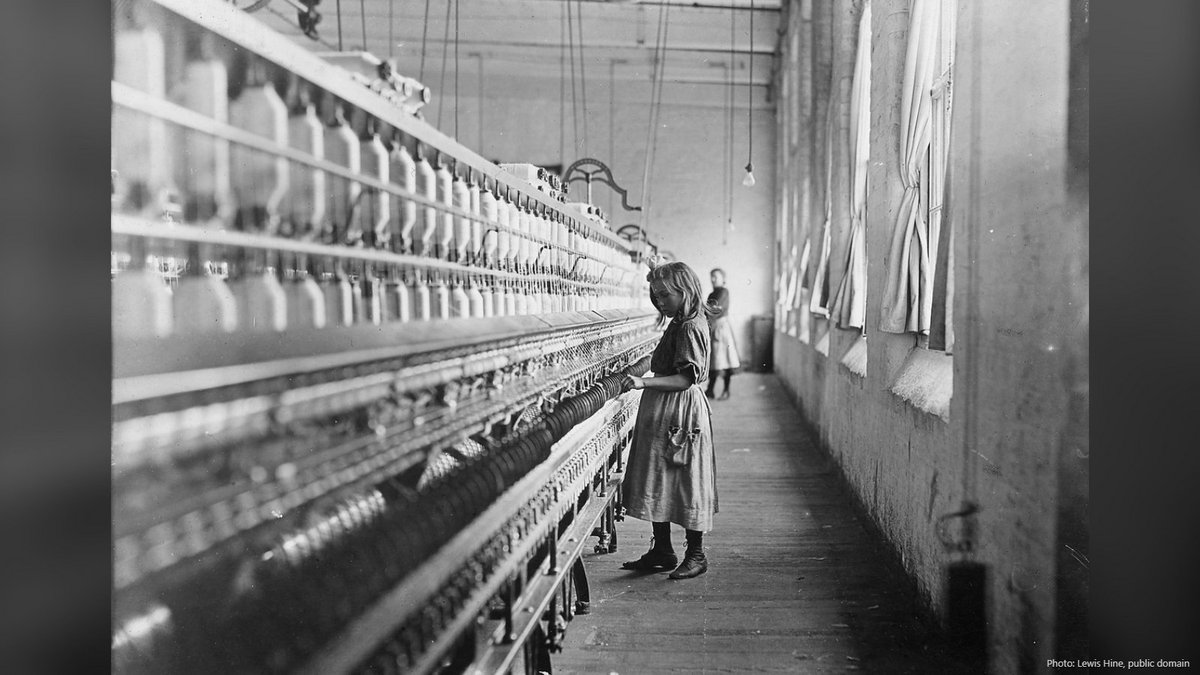
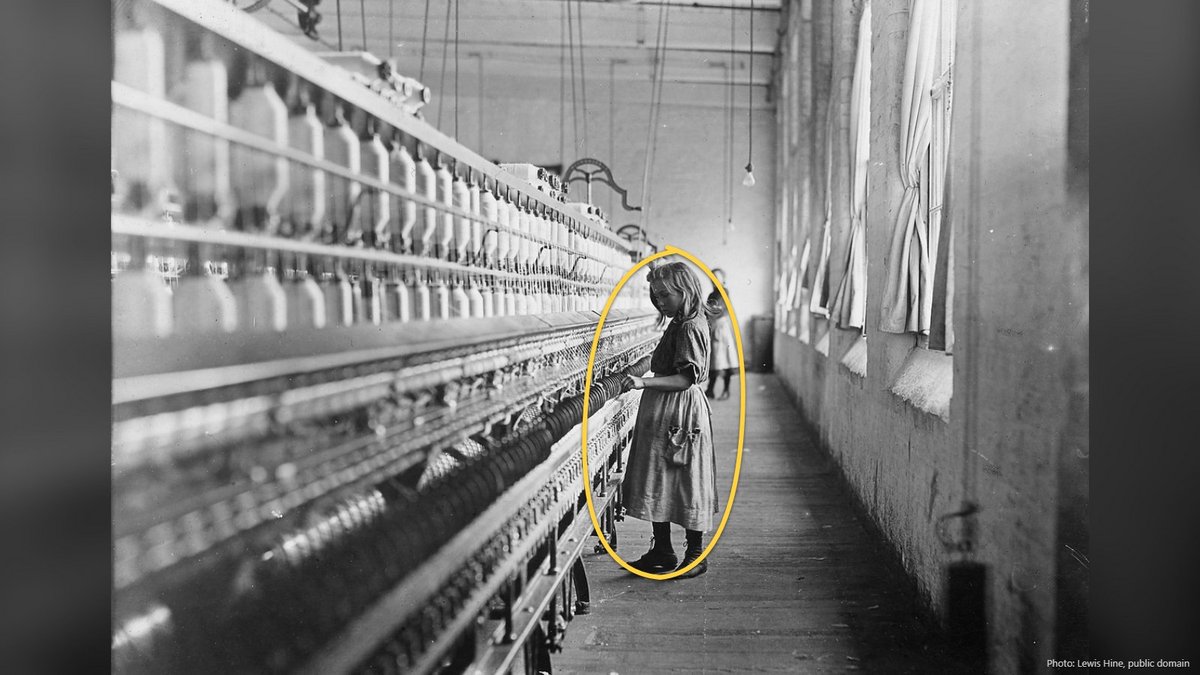
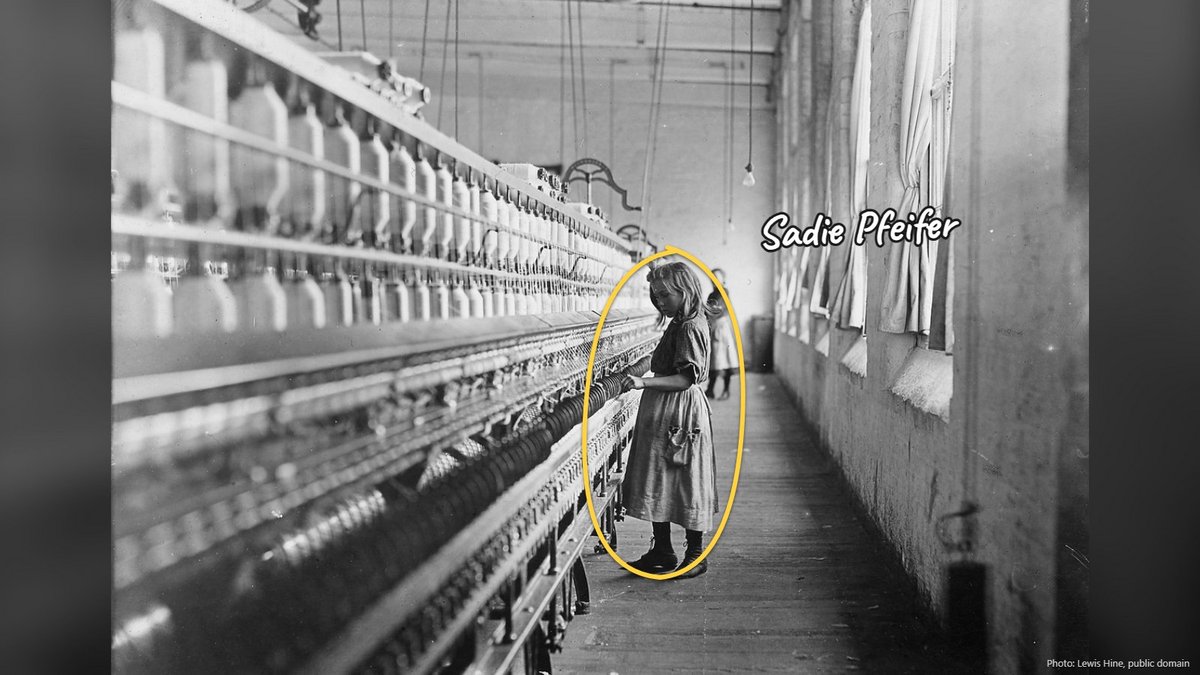
In 1908, Lewis Hine photographed Sadie Pfeifer, a small girl at work in a South Carolina cotton mill, and his child labour photos helped change American laws.
Episode worksheets (2)
- Student sheet In your teacher account
- Teacher sheet In your teacher account
Teaching guide
Objective & content
This Look Closer episode (Working lives mini-series, episode 101) is a short documentary about child labour in the United States a hundred years ago, told through the photos of Lewis Hine. It opens on his photo of Sadie Pfeifer, who worked in a cotton mill in South Carolina in 1908: she was about one metre twenty tall and had already worked there for six months. Hine used to be a teacher and believed that a photo could change the way people think. He worked for the National Child Labor Committee, a group that wanted to end child labour, which the script explains as children doing jobs that harm their health or stop them from going to school. Because factory owners did not want a photographer inside, he used tricks: he said he was a fire inspector, or that he was selling Bibles or postcards, and people say that he measured the children against the buttons on his jacket. Between 1908 and 1924 he took thousands of photos; more than five thousand are kept today in the Library of Congress. His photos were printed in magazines and shown in exhibitions, the laws slowly changed, and in 1938 a national law said that most children under sixteen could not work in factories. The narration is in the past simple, with used to and the passive (were printed, are kept); no grammar point is taught. It is a listening comprehension episode: learners listen, then answer the 10 questions in the app, 7 on facts and 3 on vocabulary (child labour, fire inspector and the Library of Congress). The study topic is how work has changed: jobs and workers a hundred years ago.
Materials & prerequisites
The folder holds the audio, the slideshow and the script; there is no lesson plan. The pupil pack and the teacher pack (answers highlighted) are one A4 page each, with the text, three pictures (Lewis Hine's photo of Sadie Pfeifer at her spinning machine, his photo of breaker boys from a Pennsylvania coal mine, a drawing of Hine beside a girl whose head reaches his jacket buttons), the key words and the 10 questions; a pupil sheet and a teacher sheet with the answer key come with them. The text ends with an open question (Think about it: Why do you think photos changed people's minds more than words?). Learners should know the past simple of common verbs and be able to read dates and large numbers. The pack's key words explain the new words (cotton mill, photographer, child labour, harm, health, trick, fire inspector, measure).
Curriculum alignment
Tagged c4-school-and-society ("École et société"), Cycle 4 (3e). The episode targets CEFR level B1-.
Possible adaptations
- Lower levels: Offer segmented listening and additional visual aids.
- Advanced levels: Encourage an oral summary and a debate in English on the theme.
- Large groups: Organise group work with differentiated roles.
🔒 Restricted content
This resource requires a subscription to be viewed.
Unlock the resourceIncluded in the subscriptionTags
- Past simple: regular verbs
- Past simple: irregular verbs
- Used to (past habits)
- Passive voice basics
- Relative clauses
- Business & work
- Art & photography
- Historical dates
- Famous people
- US states
- School and society
- Listening comprehension
- Vocabulary building
- Cultural awareness