Thanksgiving: The famous painting
Episode of the series Look Closer
- Illustrated slideshow (33 images)
- Glossary (12 words)
- Comprehension quiz (10 questions)
- 6 cultural notes
 Extract · 30 s
The episode
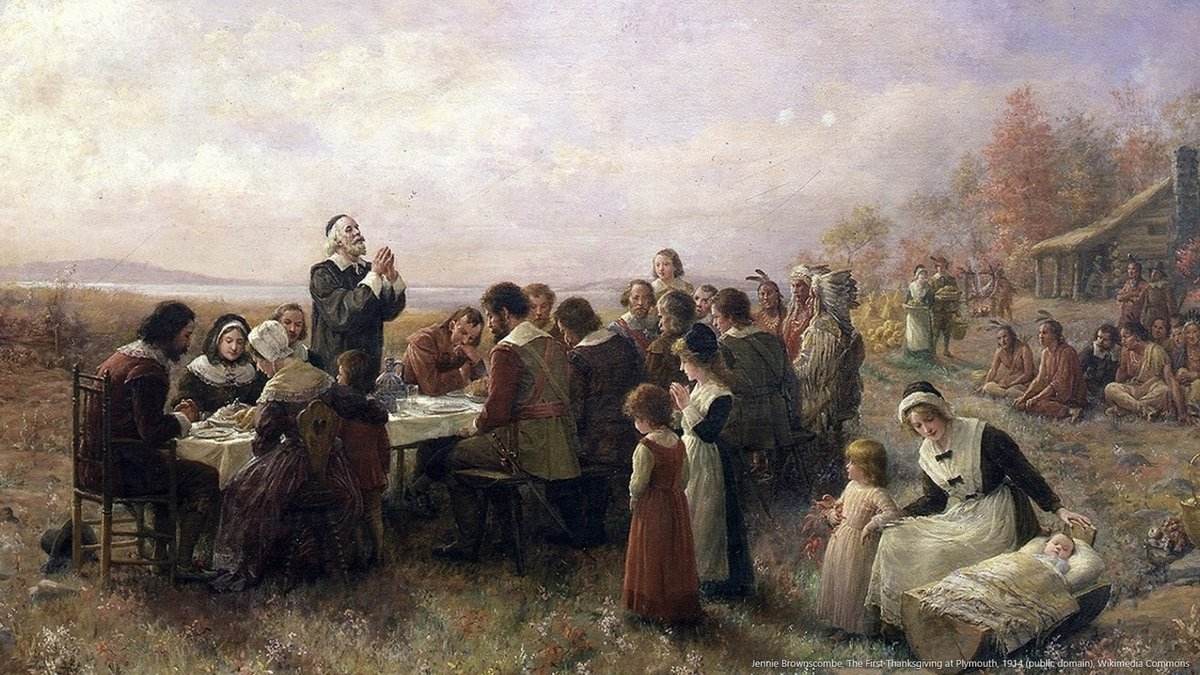
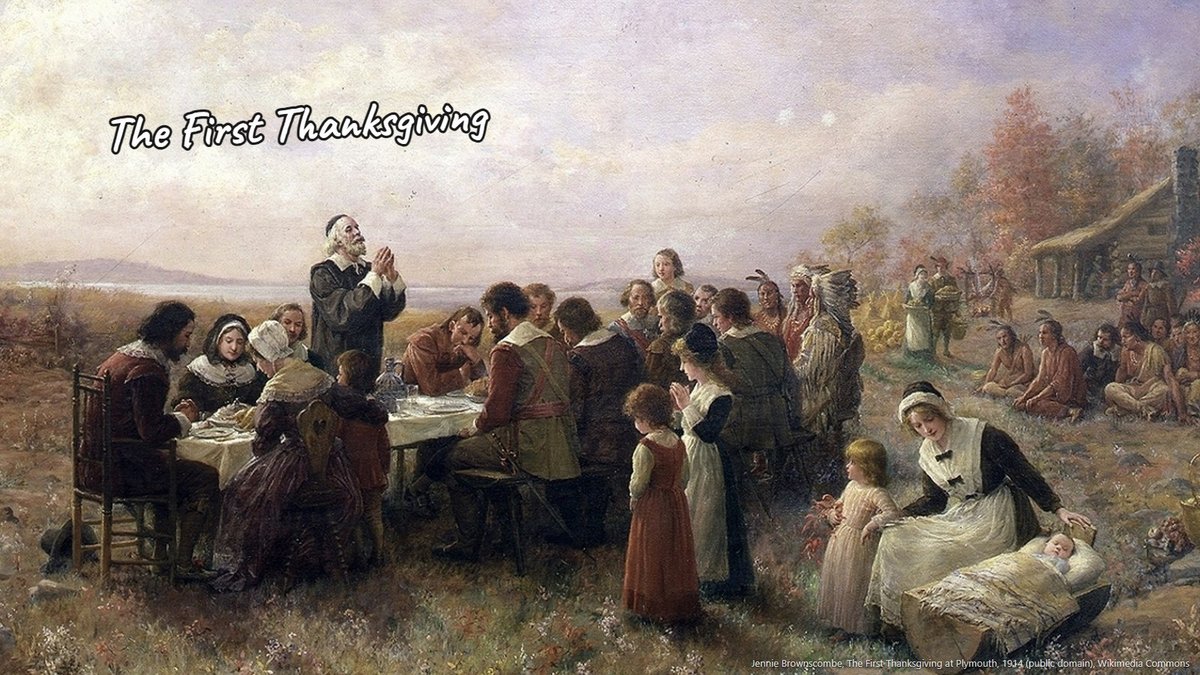
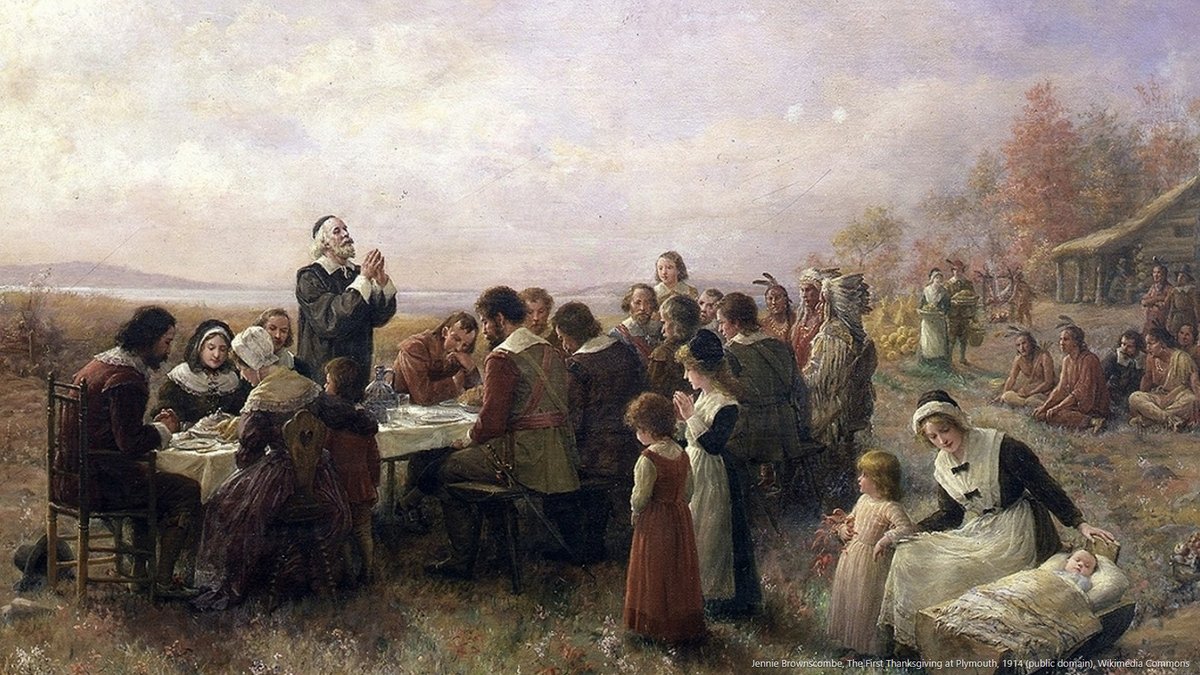
Jennie Brownscombe's famous 1914 painting of the first Thanksgiving gets several things wrong: the feather headdresses, the log cabin and the size of the two groups at the real meal in 1621.
Episode worksheets (2)
- Student sheet In your teacher account
- Teacher sheet In your teacher account
Teaching guide
Objective & content
This Look Closer episode (the mini-series Thanksgiving, four episodes on where the holiday comes from and what Americans do today) is a short documentary about "The First Thanksgiving", a painting by the American artist Jennie Brownscombe, made in 1914, almost three hundred years after the meal it shows. A single narrator compares the picture with what happened in 1621: the big feather headdresses come from the Plains peoples in the west, not from the Wampanoag; the English in Plymouth did not build log cabins; and the painting shows more English than Wampanoag, when there were about ninety Wampanoag men and about fifty English, and the Wampanoag were guests who brought five deer. The episode presents the painting as the story people told in 1914, without blaming the artist, and gives the Wampanoag their place in the event. It is a comprehension episode: the narration uses the present simple and the past simple (with were and did not), the comparative bigger and the imperatives look and count; no grammar point is taught. Learners listen, then answer the 10 questions in the app: 7 on facts and 3 on vocabulary (headdress, log cabin, guest).
Materials & prerequisites
The folder holds the audio, the slideshow and the script. Each pack is a one-page PDF with the text, three pictures, the key words and the 10 questions: a pupil pack, and a teacher pack with the answers highlighted. It also has a pupil sheet and a teacher sheet with the answer key. It has no lesson plan. Play the episode twice, hand out the pupil pack, then use the closing question (Which group was bigger at the real meal?) to check the key point; pupils can then look at the painting again and say what else they would change. Learners should know the words people, house, table and meal, and be able to read years such as 1621 and 1914. The pack's key words explain the new words (painting, artist, neighbour, feather, deer, history).
Possible adaptations
- Lower levels: Offer segmented listening and additional visual aids.
- Advanced levels: Encourage an oral summary and a debate in English on the theme.
- Large groups: Organise group work with differentiated roles.
🔒 Restricted content
This resource requires a subscription to be viewed.
Unlock the resourceIncluded in the subscriptionTags
- Present simple
- Past simple: regular verbs
- Past simple: irregular verbs
- Past simple: was / were
- Comparatives: short adjectives
- Imperatives
- Question words
- Art & photography
- Birthdays & parties
- Historical dates
- The USA: basics
- Thanksgiving
- Daily life: places, rhythms, seasons
- Listening comprehension
- Vocabulary building
- Cultural awareness
- Seasons & festivals
- Arts & media
- Exploring America
- Everyday Life
- Places & Journeys