Segregation: I have a dream
Episode of the series Look Closer
- Illustrated slideshow (39 images)
- Glossary (14 words)
- Comprehension quiz (10 questions)
- 6 cultural notes
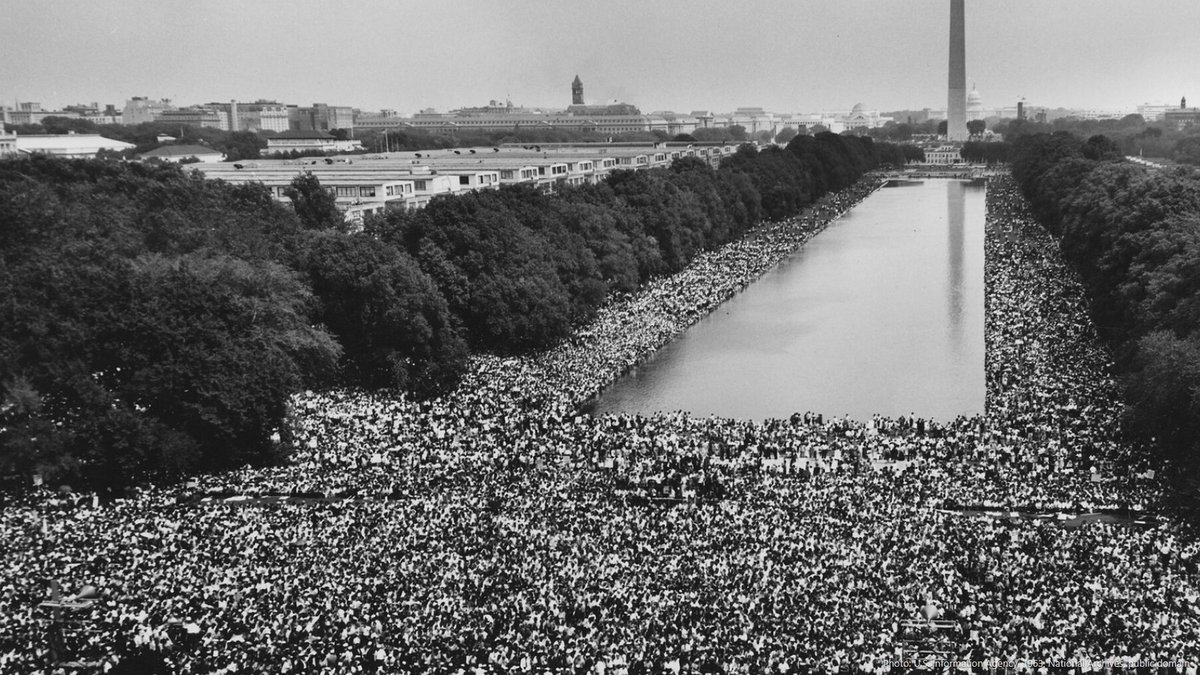
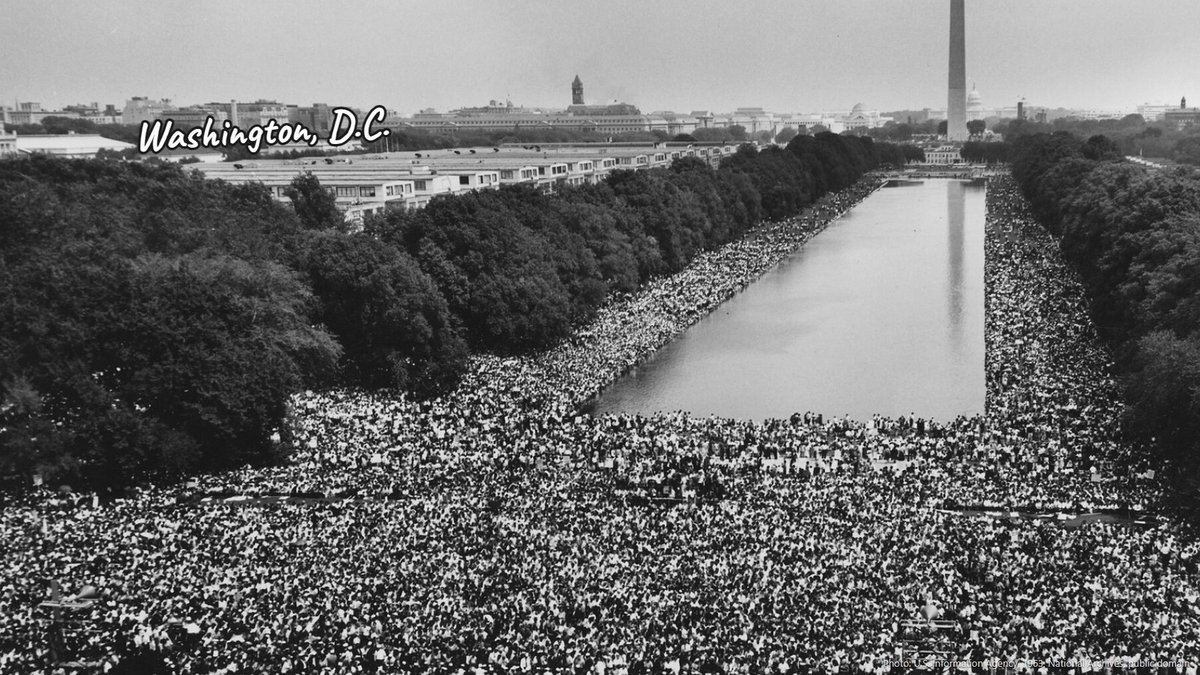
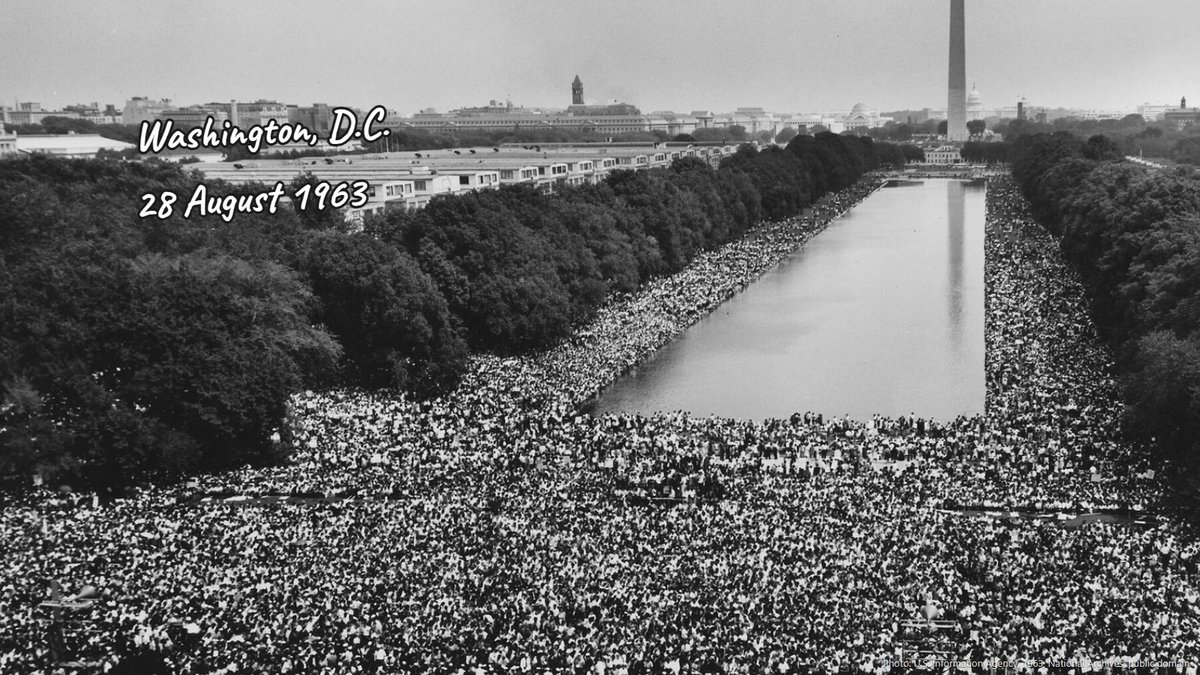 Extract · 30 s
The episode
On 28 August 1963, about 250,000 people marched in Washington for jobs, freedom and equal rights, and Martin Luther King put his notes aside to tell them his dream.
Episode worksheets (2)
- Student sheet In your teacher account
- Teacher sheet In your teacher account
Teaching guide
Objective & content
This Look Closer episode (Segregation mini-series, episode 250) is a short documentary about Martin Luther King's "I have a dream" speech. A narrator explains that on 28 August 1963 about 250,000 people came to Washington, D.C., for the March on Washington; they wanted jobs, freedom and the same rights for black and white Americans. Pupils look closer at a photo of the crowd, which stretches from the Lincoln Memorial all along the long pool of water. The last speaker of the day was Martin Luther King, a young church minister from the south. When the gospel singer Mahalia Jackson called out "Tell them about the dream, Martin!", he put his notes to one side and spoke from his heart about his dream for his four children. The episode then says what came next: the Civil Rights Act of 1964 made segregation illegal, King won the Nobel Peace Prize, and in 1968 he was killed in Memphis, Tennessee, at thirty-nine. His death is stated once, plainly, with no picture of it, and the episode closes on the pupils' own dreams.
The narration uses the past simple, with there was / there were and the conditional would inside the dream; no grammar point is taught. Learners listen, then answer the 10 questions in the app: 7 on facts and 3 on vocabulary (Mahalia Jackson, the March on Washington, church minister). The closing question (What is your dream for the future?) opens a short class discussion.
Materials & prerequisites
The folder holds the audio, the slideshow and the script; there is no lesson plan. The pupil pack and the teacher pack (answers highlighted) are one A4 page each, with the text, three pictures, the key words and the 10 questions. The folder also holds a one-page pupil sheet and a teacher sheet with the answer key. Learners should know the past simple of common verbs. The script explains its new words as it goes.
Possible adaptations
- Lower levels: Offer segmented listening and additional visual aids.
- Advanced levels: Encourage an oral summary and a debate in English on the theme.
- Large groups: Organise group work with differentiated roles.
🔒 Restricted content
This resource requires a subscription to be viewed.
Unlock the resourceIncluded in the subscriptionTags
- Past simple: irregular verbs
- Past simple: regular verbs
- Past simple: was / were
- There is / there are
- Present simple
- Civil rights
- Protest
- Famous people
- Historical dates
- Society & politics
- Encountering others
- Forms of commitment
- Listening comprehension
- Vocabulary building
- Cultural awareness
- Fairness
- Heroes & greatness
- Modern history
- Heroes & Values
- Past & Progress