New Orleans: Congo Square
Episode of the series Look Closer
- Illustrated slideshow (49 images)
- Glossary (17 words)
- Comprehension quiz (10 questions)
- 9 cultural notes
 Extract · 30 s
The episode
Congo Square in New Orleans was full of music every Sunday two hundred years ago: enslaved and free Black people danced and played drums there, and many historians say its rhythms helped to create jazz.
Episode worksheets (2)
- Student sheet In your teacher account
- Teacher sheet In your teacher account
Teaching guide
Objective & content
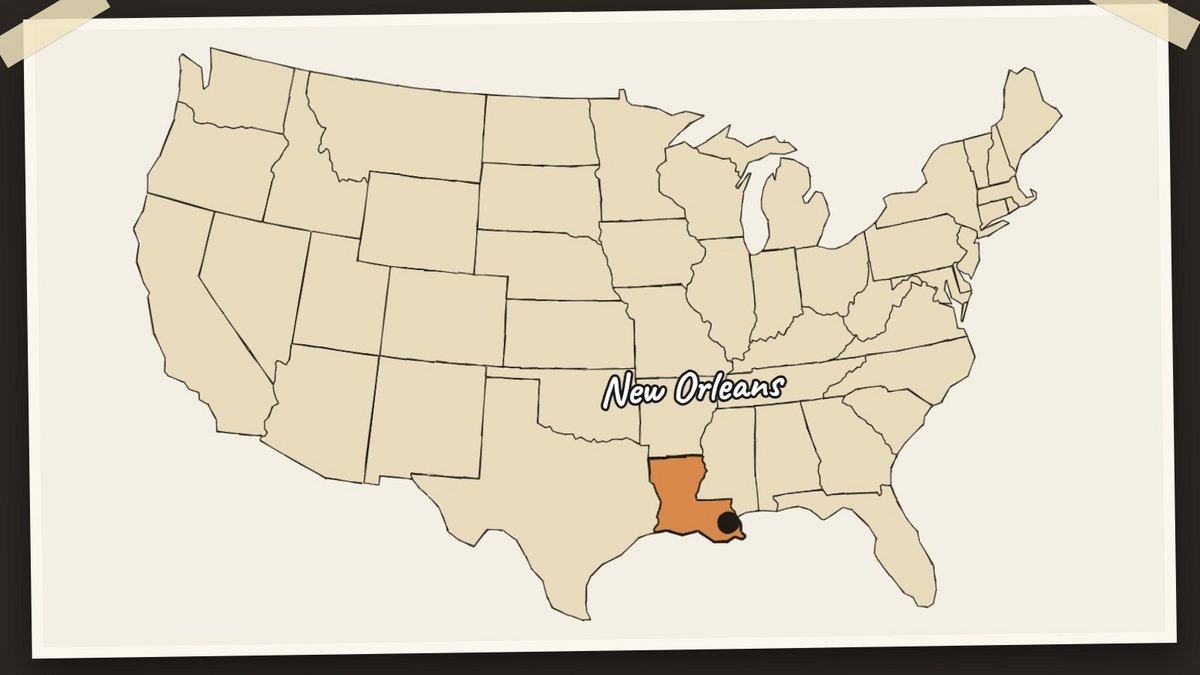
This Look Closer episode (New Orleans jazz mini-series, episode 210) is a short documentary about Congo Square, an open space in New Orleans, a city in the south of the United States. It opens on the square today, part of a park and quiet, and explains that two hundred years ago it was full of music every Sunday. In the 1700s and 1800s, many Black people in New Orleans were enslaved: they had to work for other people without being paid, and they were not free, but on Sundays most of them did not have to work. So on Sunday afternoons, enslaved and free Black people came together in the square, sold food, met their friends and made music. The episode then looks closer at the instruments in old drawings of the square: drums of different sizes and instruments with strings, a little like a banjo, while hundreds of people danced in circles to rhythms that came from Africa and the Caribbean. In 1817, the city decided that these Sunday gatherings could only take place in the square; later in the 1800s the music and dancing slowly stopped, and in 1893 the square was given a new name, Beauregard Square. But musicians in New Orleans kept the rhythms and mixed them with other kinds of music, and many historians say that these rhythms helped to create jazz. In 2011, the city gave the square its old name again, and today drummers still meet there on Sundays.
The narration is in the past simple for the history (they came together, the city decided), with had to (They had to work for other people), could (could only take place here), a passive (the square was even given a new name) and relative clauses (rhythms that came from Africa); no grammar point is taught. Slavery is stated plainly, once, and the episode stays on what people kept alive. It is a listening comprehension episode: learners listen, then answer the 10 questions in the app: 7 on facts and 3 on vocabulary (square, enslaved, gathering). The closing question (Why do you think the music from Congo Square did not disappear?) opens a short class discussion about how music and traditions are passed on.
Materials & prerequisites
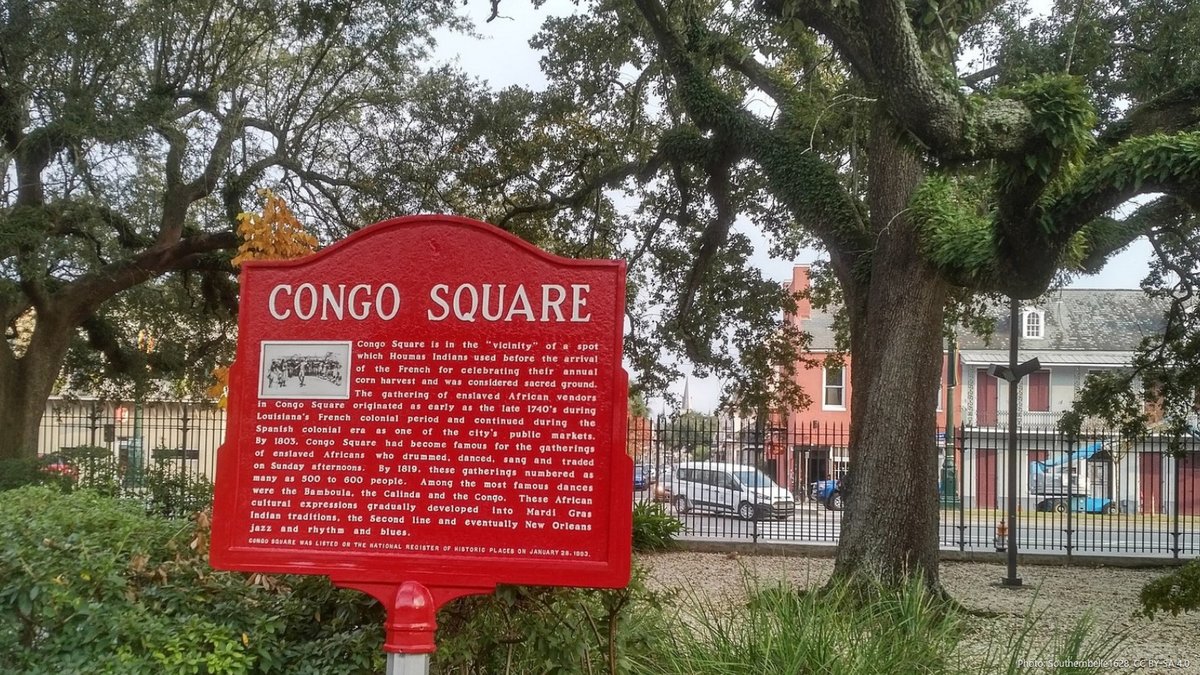
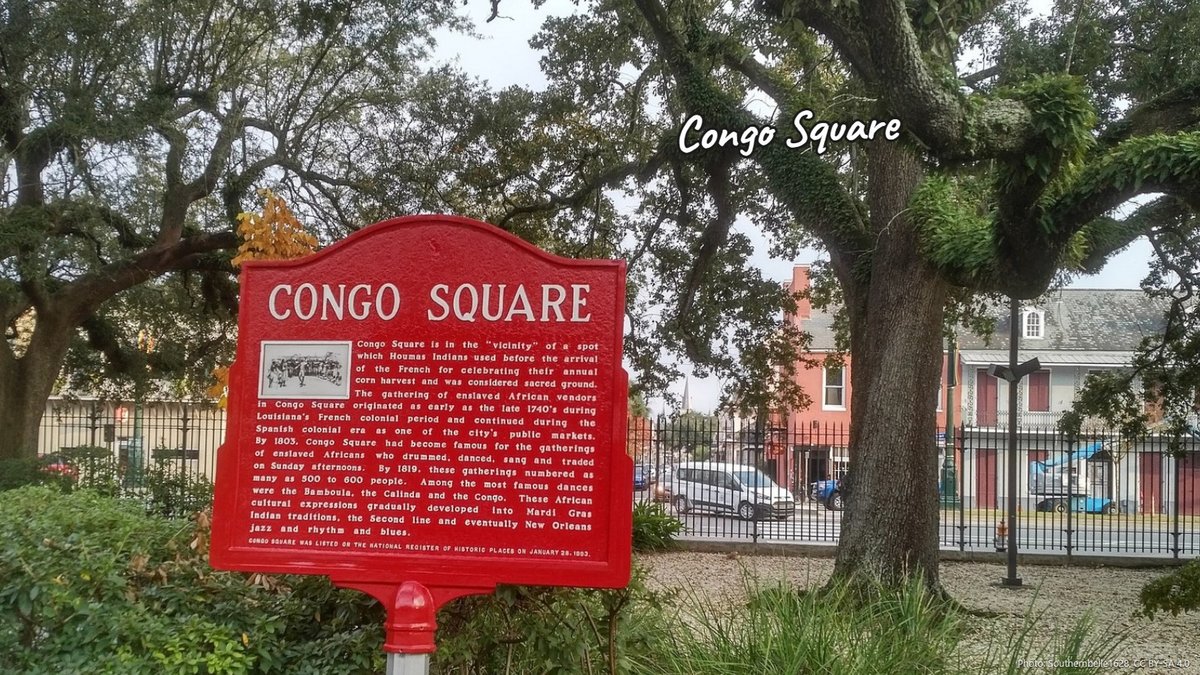
The folder holds the audio, the slideshow and the script; there is no lesson plan. The pupil pack and the teacher pack (answers highlighted) are one A4 page each, with the text, three pictures (the red Congo Square sign under the oak trees, an old drawing of a dance in the square, drummers in the square on a Sunday in 2011), the key words and the 10 questions. The folder also holds a one-page pupil sheet with the 10 questions and a teacher sheet with the answer key. Learners should know the past simple of common verbs and be able to read dates. The script explains its new words as it goes (square, enslaved).
Curriculum alignment
Tagged c4-languages-and-communication ("Langages") and c4-encountering-others ("Rencontre avec l'autre"), Cycle 4 (3e). The episode targets CEFR level B1-.
Possible adaptations
- Lower levels: Offer segmented listening and additional visual aids.
- Advanced levels: Encourage an oral summary and a debate in English on the theme.
- Large groups: Organise group work with differentiated roles.
🔒 Restricted content
This resource requires a subscription to be viewed.
Unlock the resourceIncluded in the subscriptionTags
- Present simple
- Past simple: regular verbs
- Past simple: irregular verbs
- Past simple: was / were
- Passive voice basics
- Relative clauses
- Modals in the past
- Music basics
- History of slavery
- Town & village
- Historical dates
- US states
- Languages and communication
- Encountering others
- Listening comprehension
- Vocabulary building
- Cultural awareness
- Exploring America
- Arts & media
- Modern history
- Places & Journeys
- Everyday Life
- Past & Progress