New Orleans: Louis Armstrong
Episode of the series Look Closer
- Illustrated slideshow (61 images)
- Glossary (19 words)
- Comprehension quiz (10 questions)
- 9 cultural notes
 Extract · 30 s
The episode
Louis Armstrong, born poor in New Orleans in 1901, learned the cornet in a home for boys and became one of the most famous jazz musicians in history.
Episode worksheets (2)
- Student sheet In your teacher account
- Teacher sheet In your teacher account
Teaching guide
Objective & content
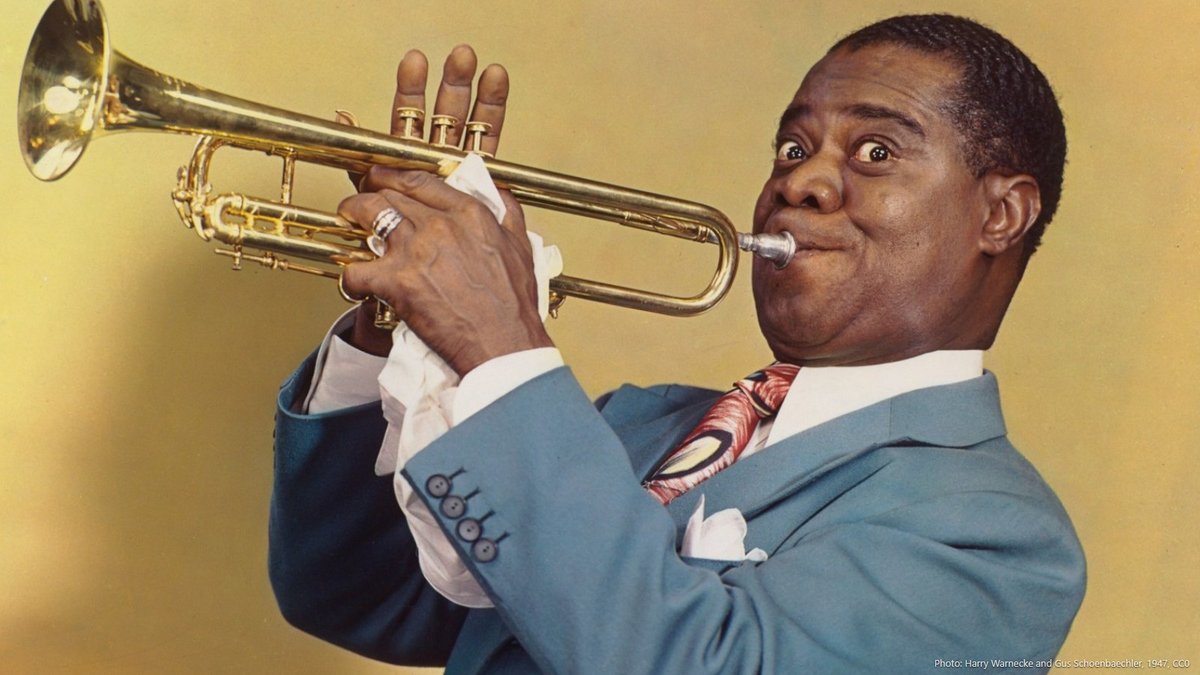
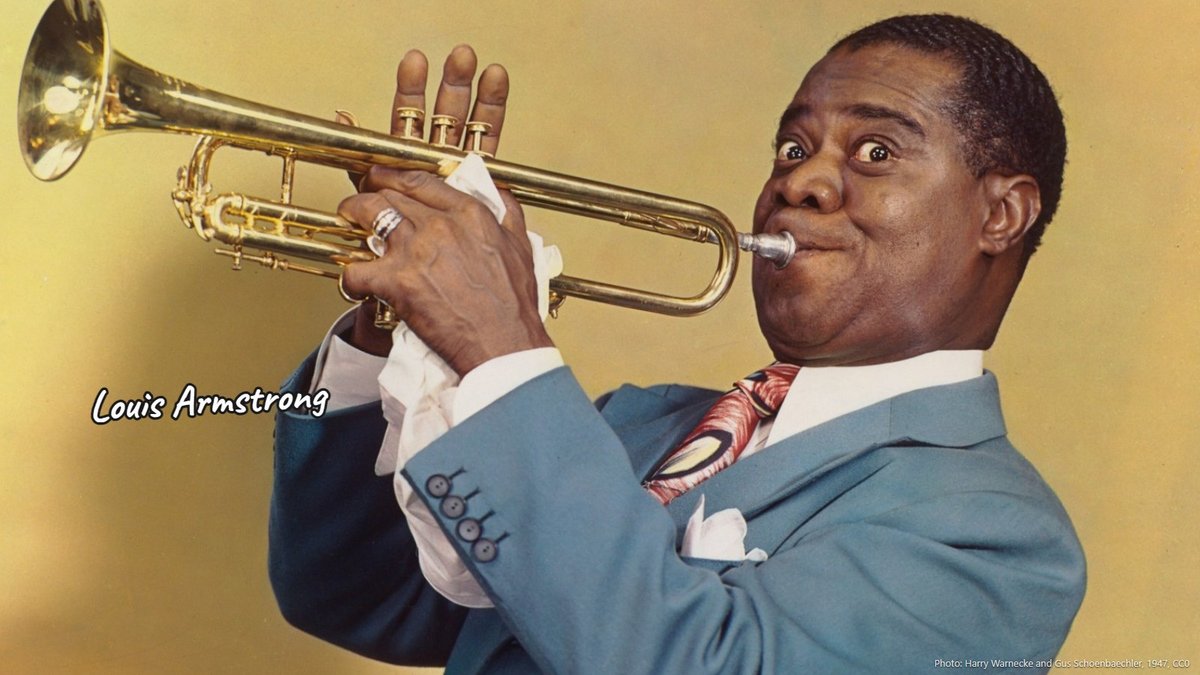
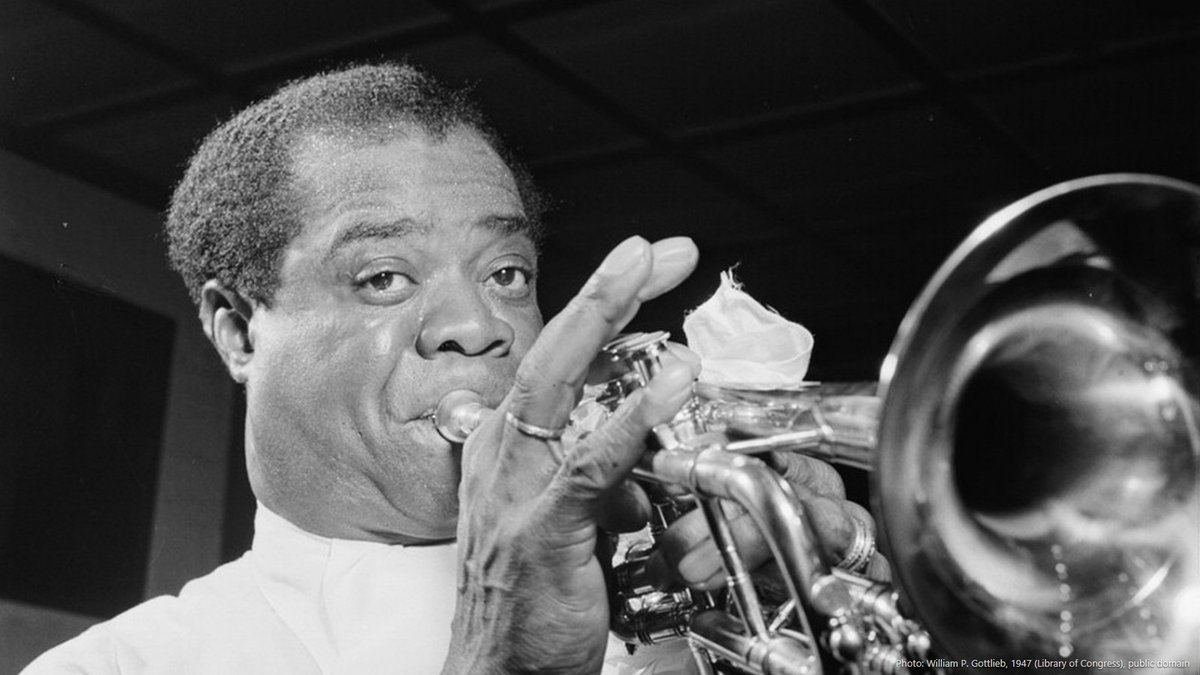
This Look Closer episode (New Orleans jazz mini-series, episode 211) is a short documentary about Louis Armstrong, one of the most famous jazz musicians in history. It opens on his trumpet and his deep, rough voice, then tells his life in order. He was born in New Orleans in 1901; his family was very poor, and as a boy he sold newspapers and delivered coal to help his mother. On New Year's Eve in 1912, when he was eleven, he fired a gun into the air to celebrate, the police arrested him and he was sent to a home for boys. That home changed his life: it had a band, he learned to play the cornet, a small kind of trumpet, and soon he was the leader of the band. Later the famous musician King Oliver taught him, and in 1922 Louis followed him to Chicago, where he became a star. The episode explains his nickname, Satchmo, short for "satchel mouth", then looks closer at his hand in the photos: he almost always held a white handkerchief to dry his face while he played. He also changed the way people sang jazz with scat singing, sounds instead of words. He travelled all over the world, made hundreds of records, released What a Wonderful World in 1967 and died in 1971; today the airport in New Orleans has his name.
The narration is in the past simple (was born, sold, followed), with passives (he was sent to a home for boys, this is called scat singing), a superlative (one of the most famous jazz musicians), a comparison with as ... as (as big as a satchel) and a relative clause (a voice that people still recognise today); no grammar point is taught. It is a listening comprehension episode: learners listen, then answer the 10 questions in the app: 7 on facts and 3 on vocabulary (cornet, satchel, scat singing). The closing question (Why do you think the home for boys changed his life?) opens a short class discussion about second chances and how a school or a group can change a young person's life.
Materials & prerequisites
The folder holds the audio, the slideshow and the script; there is no lesson plan. The pupil pack and the teacher pack (answers highlighted) are one A4 page each, with the text, three photos (the bugle Louis Armstrong played at the home for boys, Armstrong playing the trumpet with a white handkerchief in his hand, Armstrong laughing on stage with his band in 1959), the key words and the 10 questions. The folder also holds a one-page pupil sheet with the 10 questions and a teacher sheet with the answer key. Learners should know the past simple of common verbs and be able to read dates. The script explains its new words as it goes (cornet, satchel, scat singing).
Curriculum alignment
Tagged c4-languages-and-communication ("Langages") and c4-encountering-others ("Rencontre avec l'autre"), Cycle 4 (3e). The episode targets CEFR level B1-.
Possible adaptations
- Lower levels: Offer segmented listening and additional visual aids.
- Advanced levels: Encourage an oral summary and a debate in English on the theme.
- Large groups: Organise group work with differentiated roles.
🔒 Restricted content
This resource requires a subscription to be viewed.
Unlock the resourceIncluded in the subscriptionTags
- Present simple
- Past simple: regular verbs
- Past simple: irregular verbs
- Past simple: was / were
- Passive voice basics
- Relative clauses
- Superlatives
- As...as comparisons
- Music basics
- Famous people
- Jobs: basics
- Family
- Historical dates
- US states
- Languages and communication
- Encountering others
- Listening comprehension
- Vocabulary building
- Cultural awareness
- Exploring America
- Arts & media
- Modern history
- Places & Journeys
- Everyday Life
- Past & Progress