California Gold Rush: The Chinese miners
Episode of the series Look Closer
- Illustrated slideshow (37 images)
- Glossary (15 words)
- Comprehension quiz (10 questions)
- 6 cultural notes
 Extract · 30 s
The episode
In 1852, about 20,000 Chinese people came to Gold Rush California, which they called Gold Mountain; they paid a special tax, worked in groups, and opened the shops of San Francisco's Chinatown.
Episode worksheets (2)
- Student sheet In your teacher account
- Teacher sheet In your teacher account
Teaching guide
Objective & content
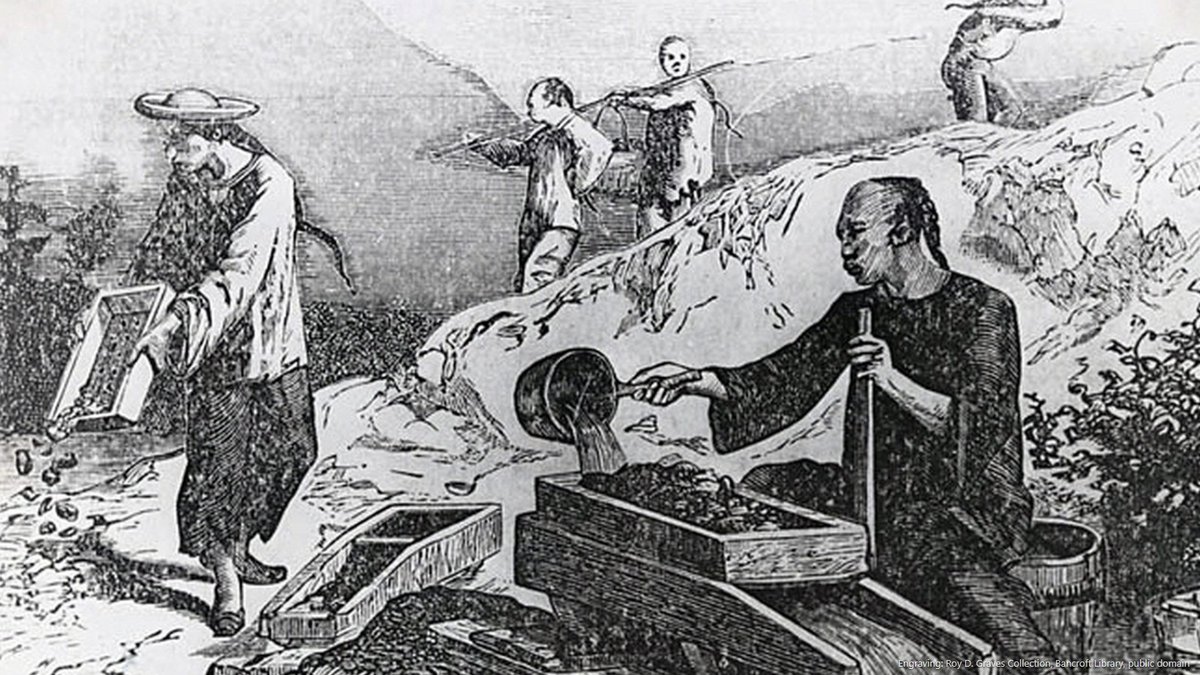
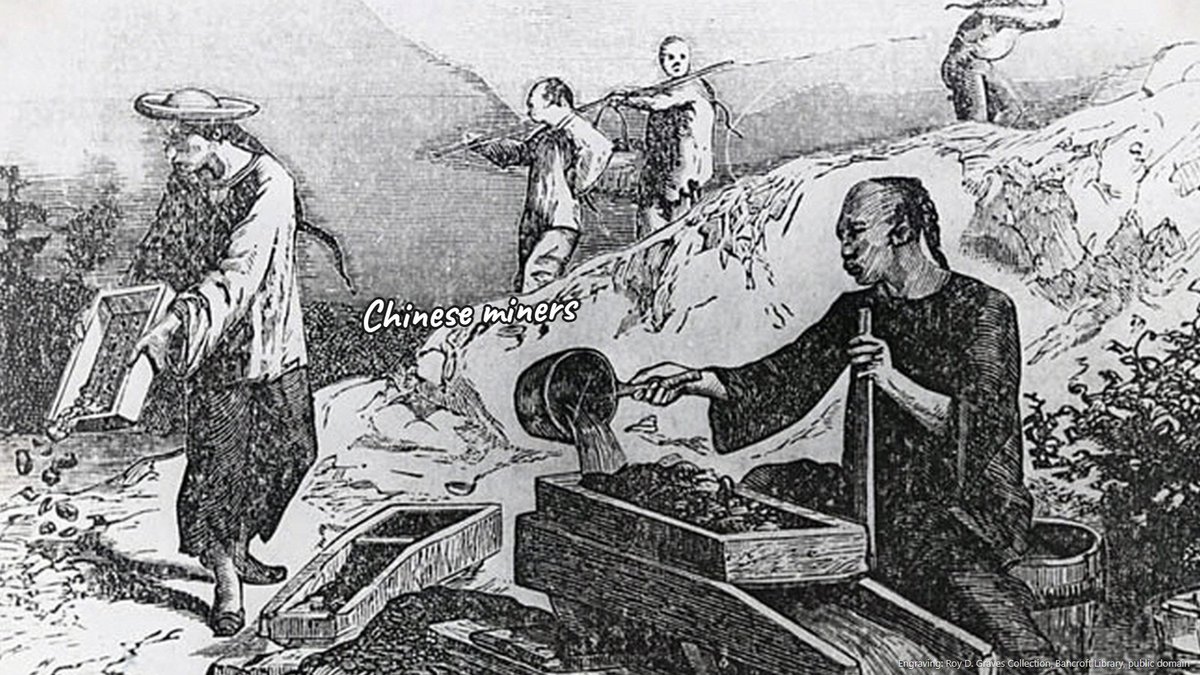
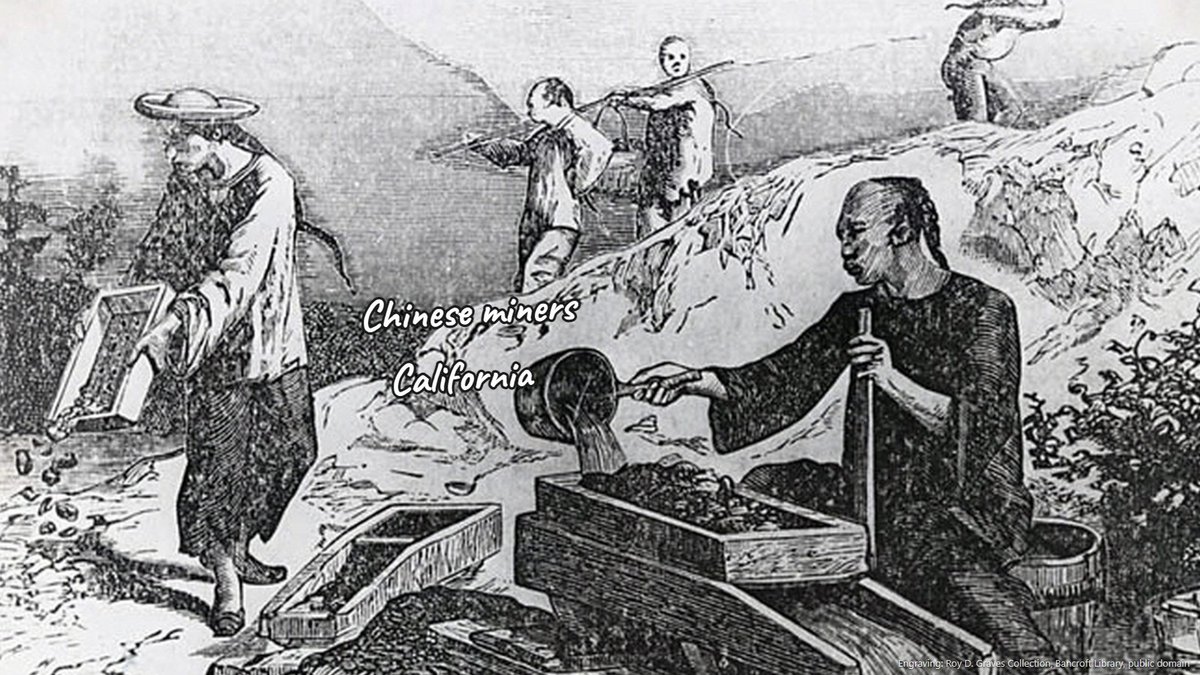
This Look Closer episode (California Gold Rush mini-series, episode 246) is a short documentary about the Chinese miners of the Gold Rush. A narrator explains that people in China heard about the gold and gave California a new name, Gold Mountain, and that in 1852 alone about 20,000 Chinese people arrived in San Francisco, most of them young men from the south of China who wanted to earn money for their families. The same year, California made miners from other countries pay a tax of three dollars a month, and most of the people who paid it were Chinese. Some miners attacked them and pushed them off their land, so the Chinese miners often worked in places others did not want, carefully and in groups. Pupils look closer at an 1852 photo of miners washing sand and stones in a long wooden box. The episode ends in San Francisco, where Chinese shops, restaurants and laundries became Chinatown, the oldest in North America and still there today. The hard facts are stated once, plainly, and the episode lands on what people built.
The narration uses the present simple and the past simple, with one past perfect (others had missed); no grammar point is taught. Learners listen, then answer the 10 questions in the app: 7 on facts and 3 on vocabulary (tax, laundry, Gold Mountain). The closing question (Why do you think the Chinese miners worked in groups?) opens a short class discussion.
Materials & prerequisites
The folder holds the audio, the slideshow and the script; there is no lesson plan. The pupil pack and the teacher pack (answers highlighted) are one A4 page each, with the text, three pictures, the key words and the 10 questions. The folder also holds a one-page pupil sheet and a teacher sheet with the answer key. Learners should know the present simple and the past simple of common verbs. The script explains its new words as it goes.
Curriculum alignment
Tagged c4-travel-and-migration ("Voyages et migrations") and c4-encountering-others ("Rencontres avec d'autres cultures"), Cycle 4. The episode targets CEFR level B1-.
Possible adaptations
- Lower levels: Offer segmented listening and additional visual aids.
- Advanced levels: Encourage an oral summary and a debate in English on the theme.
- Large groups: Organise group work with differentiated roles.
🔒 Restricted content
This resource requires a subscription to be viewed.
Unlock the resourceIncluded in the subscriptionTags
- Present simple
- Past simple: regular verbs
- Past simple: irregular verbs
- Past perfect
- Relative clauses
- Immigration
- Historical dates
- Government
- Jobs: basics
- Money management
- San Francisco
- US states
- Travel and migration
- Encountering others
- Listening comprehension
- Vocabulary building
- Cultural awareness
- Exploring America
- Home, culture & migration
- Modern history
- Places & Journeys
- Belonging & Home
- Past & Progress