India: Tea from Assam
Episode of the series Look Closer
- Illustrated slideshow (54 images)
- Glossary (17 words)
- Comprehension quiz (10 questions)
- 9 cultural notes
 Extract · 30 s
The episode
In 1823, the Singpho people of Assam showed a Scottish trader a tea plant that grew wild in the forest, and Assam became one of the great tea regions.
Episode worksheets (2)
- Student sheet In your teacher account
- Teacher sheet In your teacher account
Teaching guide
Objective & content
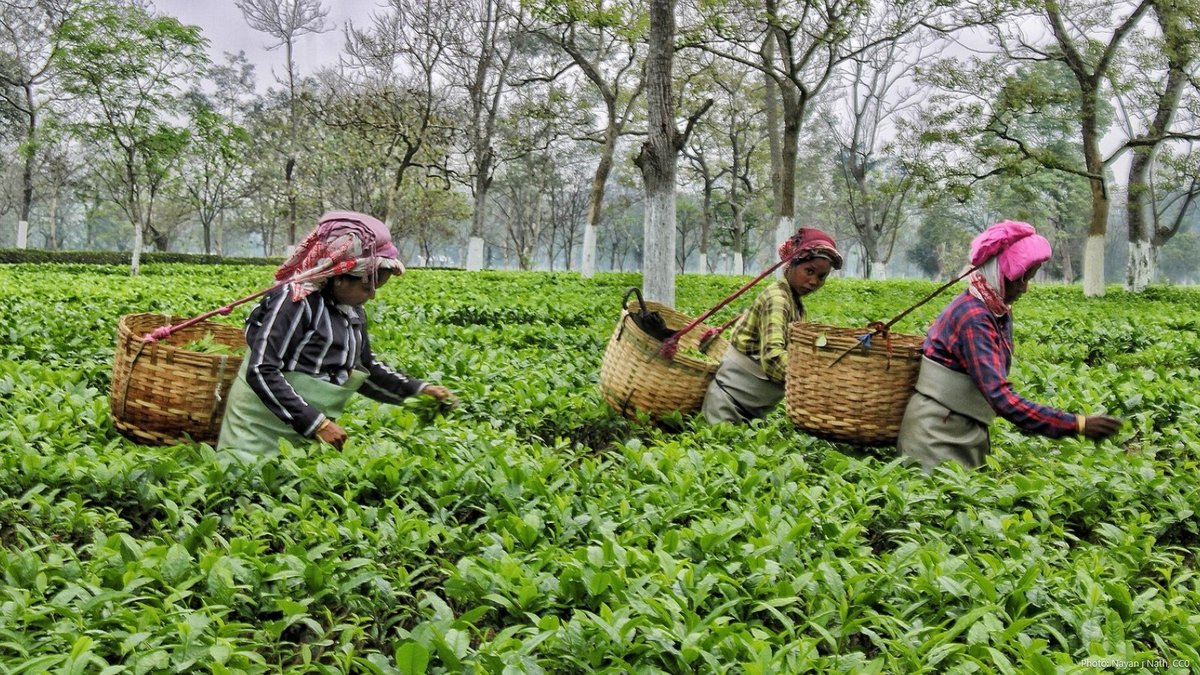
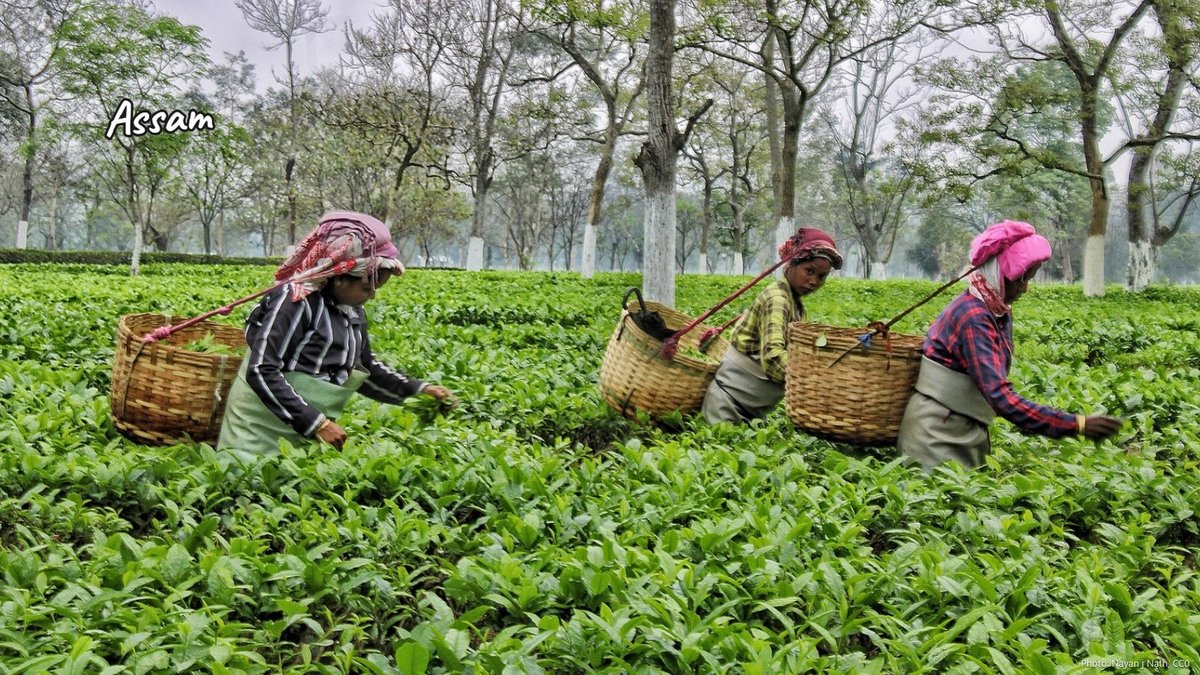
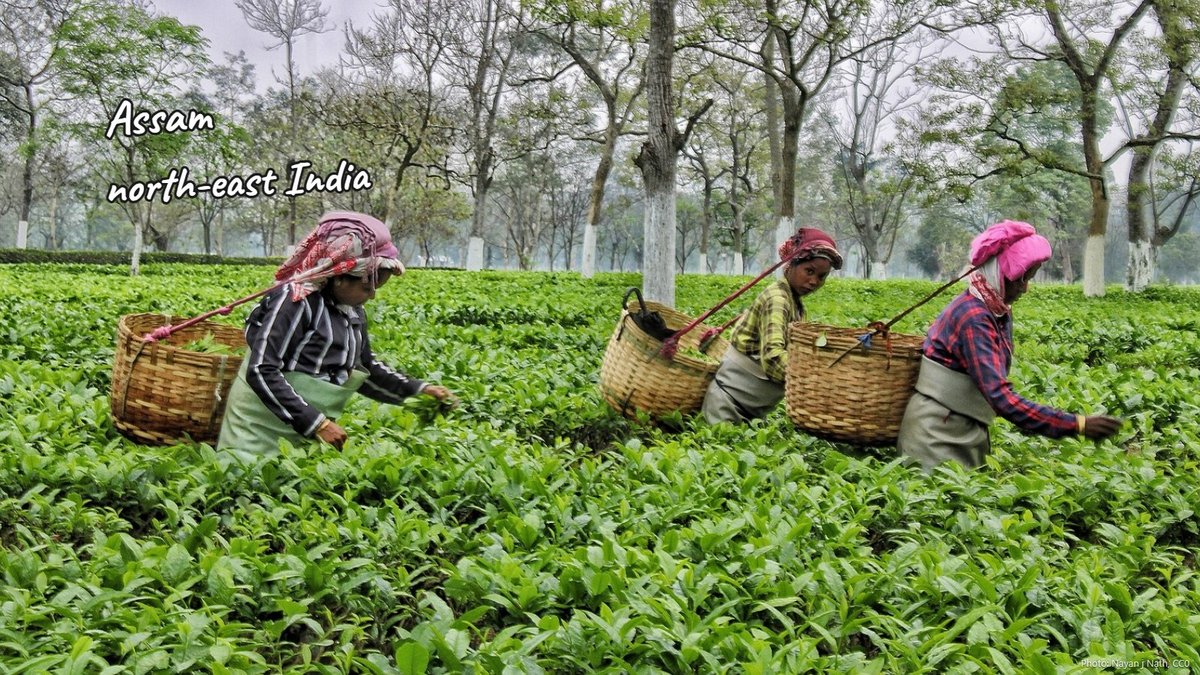
This Look Closer episode (India: a feast of food mini-series, episode 194) is a short documentary about tea from Assam, in the north-east of India. It opens in a tea garden, where the bushes are kept low so that workers can pick the youngest leaves by hand. Two hundred years ago, people in Britain already drank a lot of tea, but almost all of it came from China, which kept the secrets of growing it. In 1823, the Singpho people showed the Scottish trader Robert Bruce a plant that grew wild in the forest and that they used to make a drink. After Robert died, his brother Charles continued the work, scientists agreed that the plant was a real tea plant, and the British began to grow it on large farms called tea gardens. The first tea from Assam was sold in London in 1839: just eight wooden boxes. Today, Assam grows about half of India's tea, and its strong, dark tea is often used in British breakfast tea. The episode then looks closer at a train platform, where a chai wallah sells chai, tea cooked with milk, sugar and spices, in small cups. The narration is in the past simple and the present simple, with some passive forms (The tea bushes are kept low, the first tea from Assam was sold in London) and a relative clause (a plant that grew wild in the forest); no grammar point is taught. It is a listening comprehension episode: learners listen, then answer the 10 questions in the app: 7 on facts and 3 on vocabulary (tea gardens, chai wallah and chai). The episode leaves out the story of the tea garden workers. From the mid-1800s, most of them were recruited from other parts of India, such as today's Jharkhand, on long contracts, with low pay and hard living conditions; many of their descendants still work in Assam's tea gardens today.
Materials & prerequisites
The folder holds the audio, the slideshow and the script; there is no lesson plan. The pupil pack and the teacher pack (answers highlighted) are one A4 page each, with the text, three photos (tea pickers in Assam, the leaves of the Assam tea plant, a chai wallah at his street stall in Kolkata), the key words and the 10 questions; a pupil sheet and a teacher sheet with the answer key come with them. The text ends with an open question (Why do you think Britain wanted to grow its own tea, and not buy it from China?). Learners should know the past simple of common verbs and be able to read dates. The script explains its new words as it goes (tea gardens, chai wallah, chai).
Curriculum alignment
Tagged c4-travel-and-migration ("Voyages et migrations") and c4-encountering-others ("Rencontre avec l'autre"), Cycle 4 (3e). The episode targets CEFR level B1-.
Possible adaptations
- Lower levels: Offer segmented listening and additional visual aids.
- Advanced levels: Encourage an oral summary and a debate in English on the theme.
- Large groups: Organise group work with differentiated roles.
🔒 Restricted content
This resource requires a subscription to be viewed.
Unlock the resourceIncluded in the subscriptionTags
- Past simple: regular verbs
- Past simple: irregular verbs
- Past simple: was / were
- Passive voice basics
- Relative clauses
- Present simple
- Food & drinks
- Commonwealth history
- Historical dates
- Famous people
- Business & work
- India
- British breakfast
- Travel and migration
- Encountering others
- Listening comprehension
- Vocabulary building
- Cultural awareness