India: The dabbawalas
Episode of the series Look Closer
- Illustrated slideshow (57 images)
- Glossary (16 words)
- Comprehension quiz (10 questions)
- 9 cultural notes
 Extract · 30 s
The episode
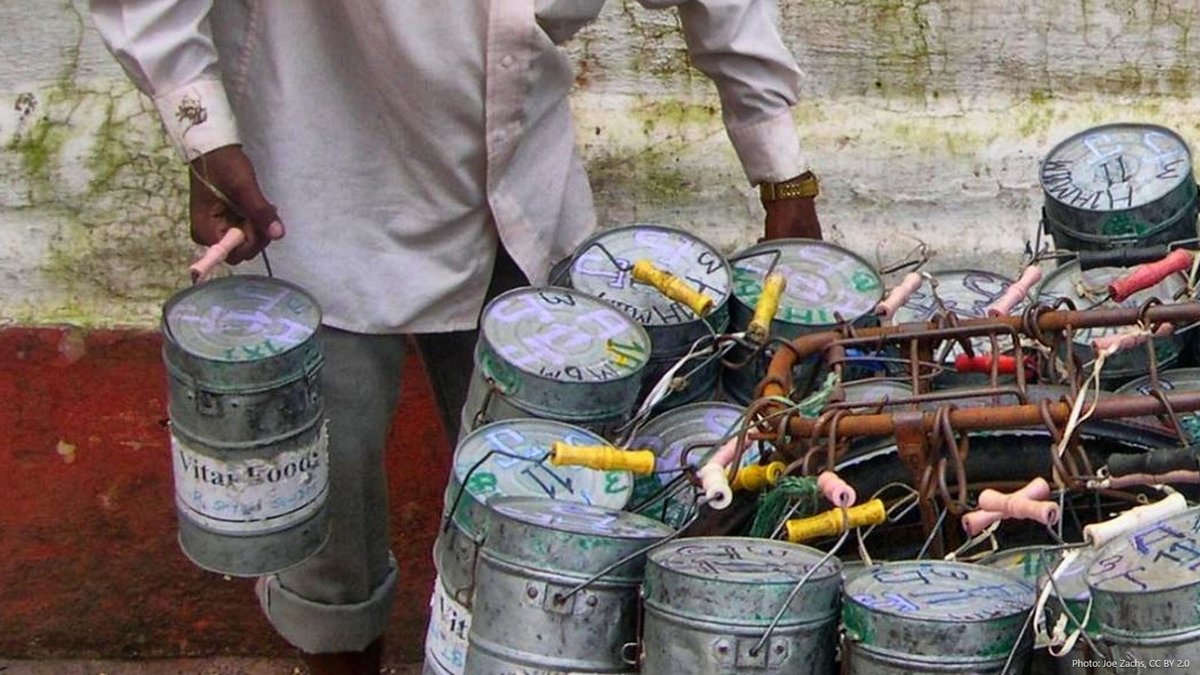
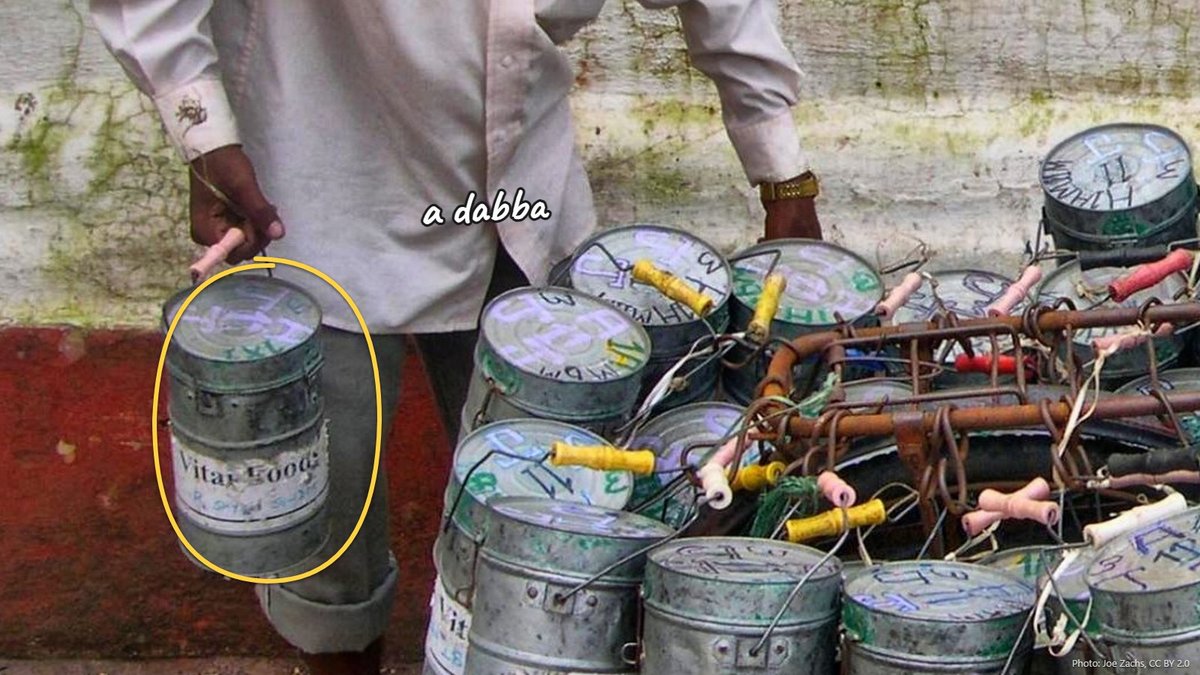
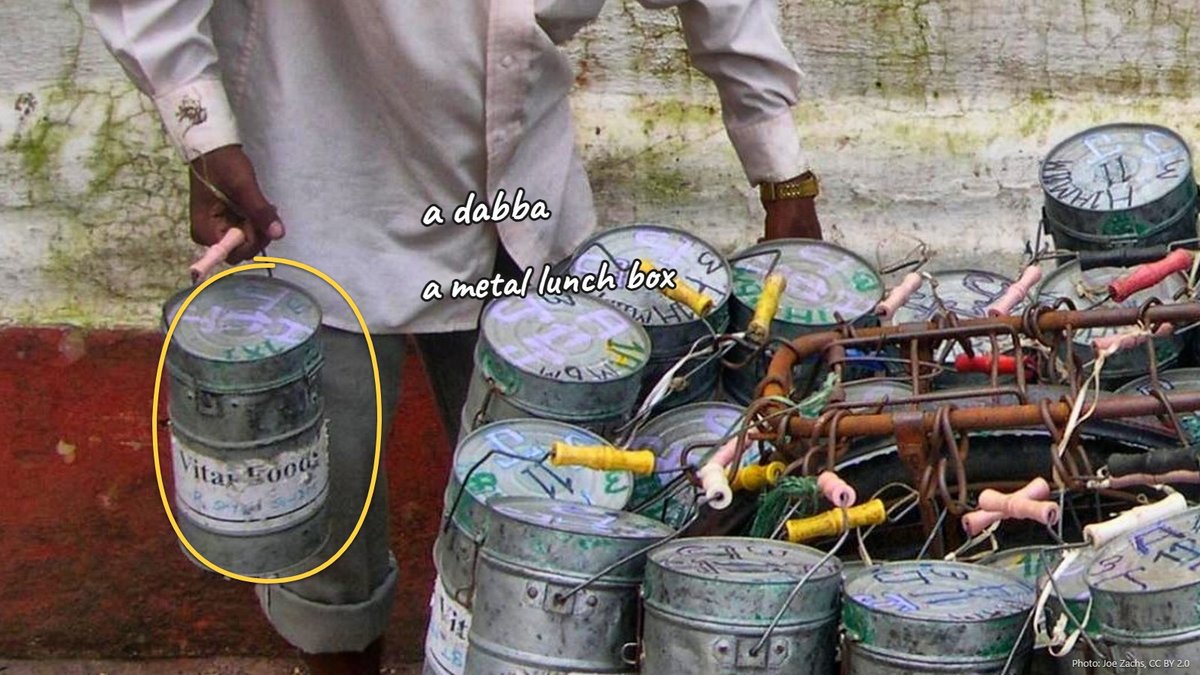
In Mumbai, about 5,000 dabbawalas carry around 200,000 hot lunches a day in metal boxes, and a code painted on each lid takes every box to the right person.
Episode worksheets (2)
- Student sheet In your teacher account
- Teacher sheet In your teacher account
Teaching guide
Objective & content
This Look Closer episode (India: a feast of food mini-series, episode 190) is a short documentary about the dabbawalas of Mumbai. It opens on a dabba, a metal lunch box, and explains that thousands of these boxes travel across Mumbai, a huge city in India, every day. The people who carry them are called dabbawalas: in the morning they collect hot lunches from people's homes, then they take the boxes to office workers, and in the afternoon they bring the empty boxes back. About 5,000 dabbawalas deliver around 200,000 lunches a day, with bicycles, wooden carts and the city's crowded trains. Each box passes from one dabbawala to another several times on its journey, so the episode asks how it reaches the right person, and then looks closer at the lid: colours, numbers and letters painted on it form a code that shows the station where the box starts, the station where it must go, the building and even the floor. Many dabbawalas did not stay at school for long, and some cannot read well, so the code is simple enough for everyone to use, and mistakes are very rare. The service started in 1890, when Mahadeo Havaji Bachche began delivering lunches with about a hundred men, and it is still running. Business students around the world study it, and in 2003 Prince Charles, now King Charles III, came to Mumbai to meet the dabbawalas.
The narration is in the present simple, with relative clauses (The people who carry them, the station where the box starts), a passive (are called dabbawalas), must (where it must go) and the past simple for the history (The service started in 1890); no grammar point is taught. It is a listening comprehension episode: learners listen, then answer the 10 questions in the app: 7 on facts and 3 on vocabulary (dabba, dabbawala, code). The closing question (Why do you think the code uses colours and numbers, not words?) opens a short class discussion about reading and codes.
Materials & prerequisites
The folder holds the audio, the slideshow and the script; there is no lesson plan. The pupil pack and the teacher pack (answers highlighted) are one A4 page each, with the text, three photos (a dabbawala holding a metal dabba beside his bicycle hung with lunch boxes, a crowded local train in Mumbai, dabbas with painted codes on their lids), the key words and the 10 questions. The folder also holds a one-page pupil sheet with the 10 questions and a teacher sheet with the answer key. Learners should know the present simple and the past simple of common verbs and be able to read large numbers and dates. The script explains its new words as it goes (dabba, dabbawala, code).
Curriculum alignment
Tagged c4-encountering-others ("Rencontre avec l'autre") and c4-school-and-society ("École et société"), Cycle 4 (3e). The episode targets CEFR level B1-.
Possible adaptations
- Lower levels: Offer segmented listening and additional visual aids.
- Advanced levels: Encourage an oral summary and a debate in English on the theme.
- Large groups: Organise group work with differentiated roles.
🔒 Restricted content
This resource requires a subscription to be viewed.
Unlock the resourceIncluded in the subscriptionTags
- Present simple
- Passive voice basics
- Relative clauses
- Must: obligation
- Past simple: regular verbs
- Past simple: irregular verbs
- Food & drinks
- Meals
- Jobs: basics
- Business & work
- Transport
- Town & village
- Historical dates
- India
- Royal family
- Encountering others
- School and society
- Listening comprehension
- Vocabulary building
- Cultural awareness