New Orleans: The French Quarter
Episode of the series Look Closer
- Illustrated slideshow (56 images)
- Glossary (15 words)
- Comprehension quiz (10 questions)
- 9 cultural notes
 Extract · 30 s
The episode
The French Quarter is the oldest part of New Orleans: its street names are French, but Spanish tiles and brick houses with courtyards recall the forty years when Spain ruled the city.
Episode worksheets (2)
- Student sheet In your teacher account
- Teacher sheet In your teacher account
Teaching guide
Objective & content
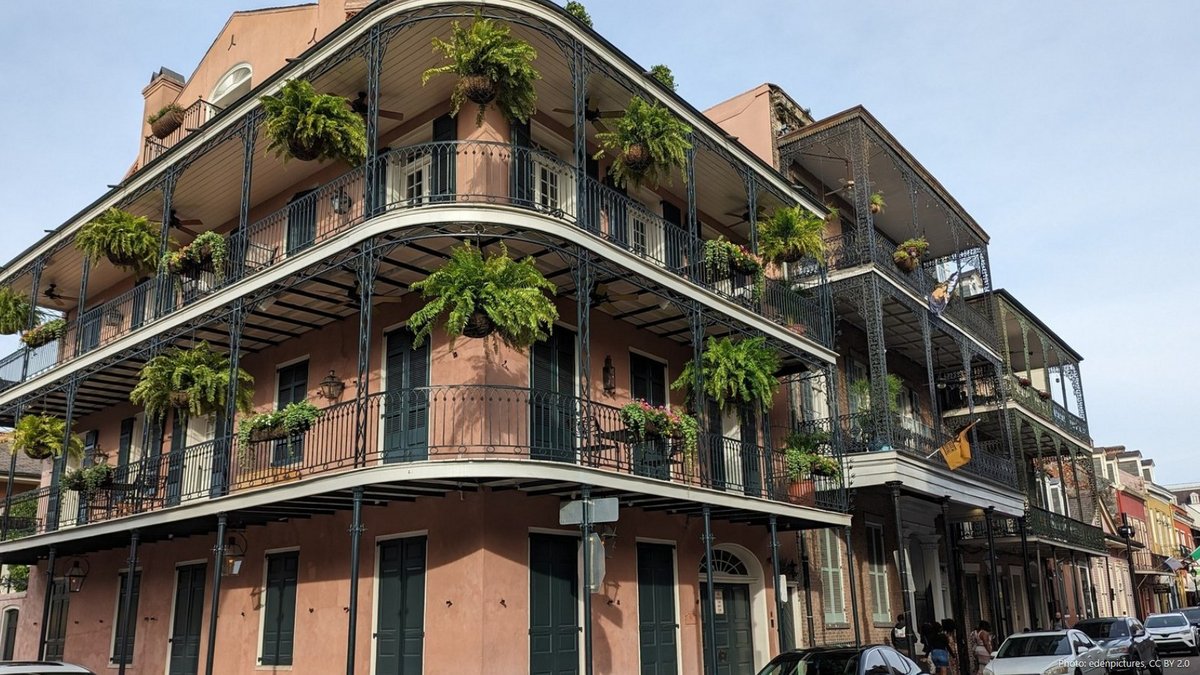
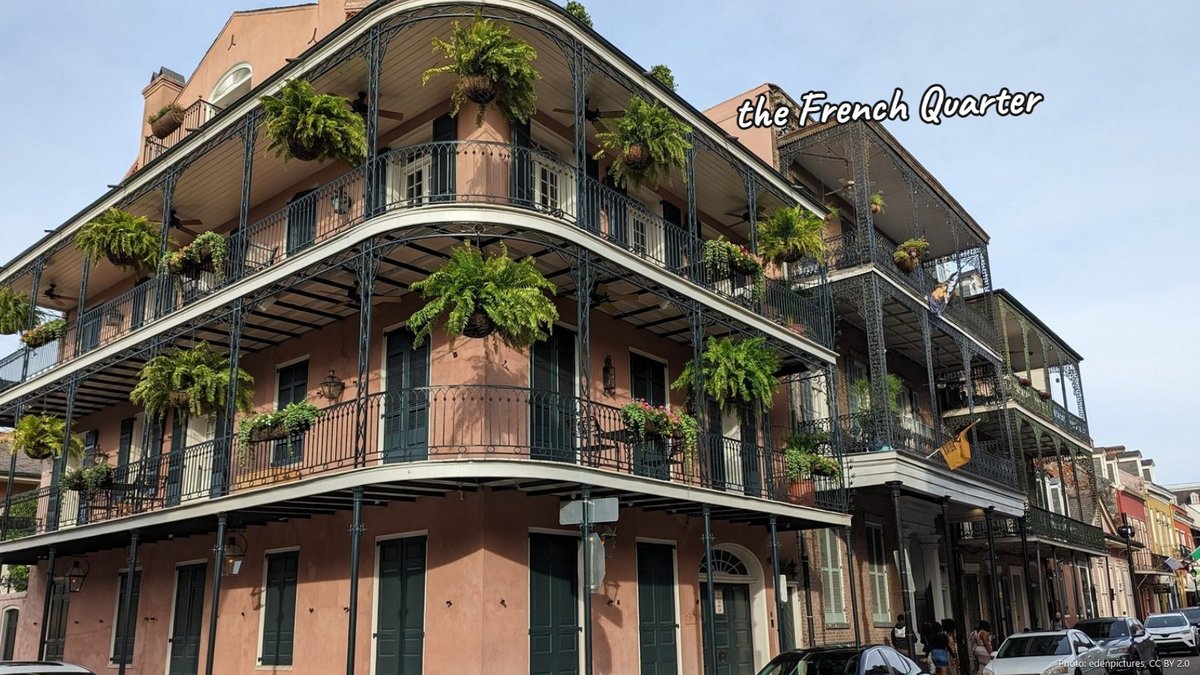
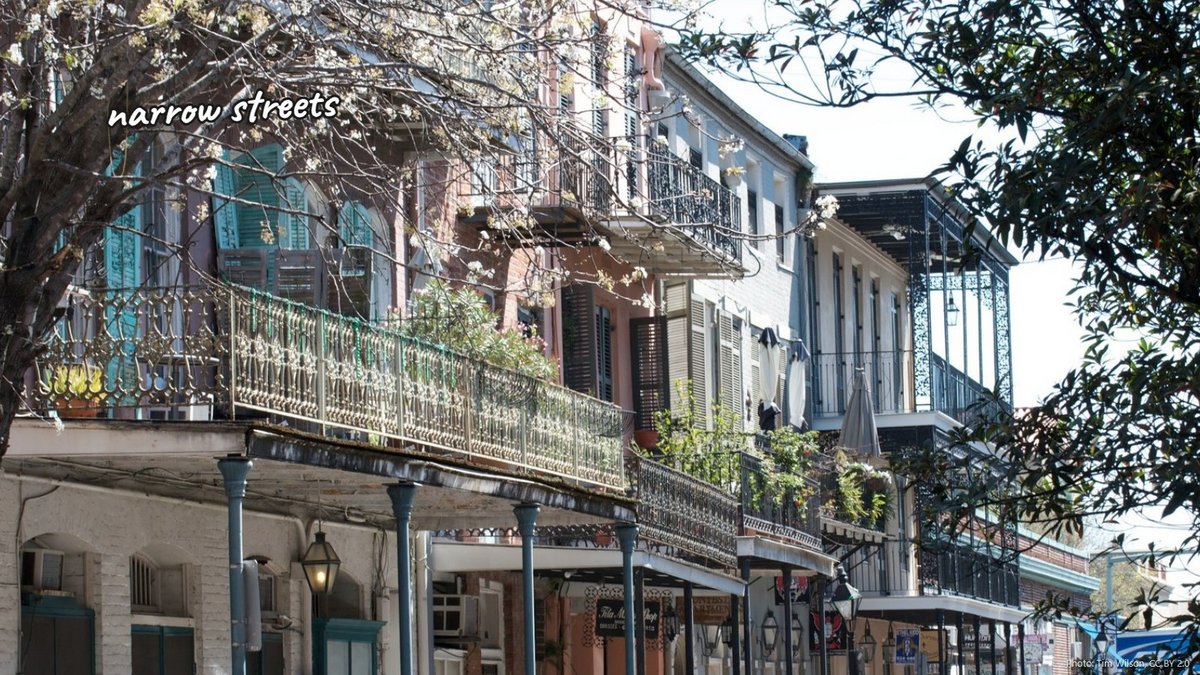
This Look Closer episode (New Orleans: city of jazz mini-series, episode 215) is a short documentary about the French Quarter, the oldest part of New Orleans, with its narrow streets, its old houses with iron balconies and music on almost every corner. The city was founded by the French in 1718 and named after a French prince, the Duke of Orléans, which is why it is called New Orleans. Many streets still have French names: Bourbon Street is named after the family of the kings of France, and Toulouse Street after a French count. The episode then looks closer at the tiles on the walls at the street corners: under the name there is another one, in Spanish, Calle de Bourbon. In 1762, France gave Louisiana to Spain, and Spain ruled New Orleans for about forty years. During this time, two big fires, in 1788 and 1794, destroyed most of the old wooden houses, and the Spanish rebuilt the city with brick instead of wood, so that it would not burn so easily, with courtyards at the back of the houses. So most of the old buildings in the French Quarter are, in fact, Spanish in style. Spain then gave Louisiana back to France, and in 1803 the United States bought it: New Orleans became an American city. But the French Quarter did not lose its French past: you can hear it in the names and taste it in the food, such as the beignets, squares of fried dough covered in white sugar.
The narration is in the present simple for the city today and the past simple for its history (France gave Louisiana to Spain, the United States bought it), with passives (was founded by the French, is named after), a superlative (the oldest part) and a clause of purpose (so that it would not burn so easily); no grammar point is taught. It is a listening comprehension episode: learners listen, then answer the 10 questions in the app: 7 on facts and 3 on vocabulary (the French Quarter, beignets, brick). The closing question (Why do you think the old Spanish names are still on the walls?) opens a short class discussion about what street names tell us about the past.
Materials & prerequisites
The folder holds the audio, the slideshow and the script; there is no lesson plan. The pupil pack and the teacher pack (answers highlighted) are one A4 page each, with the text, three photos (old French Quarter houses with iron balconies, the Spanish tile that reads Calle D Borbon, beignets covered in white sugar), the key words and the 10 questions. The folder also holds a one-page pupil sheet with the 10 questions and a teacher sheet with the answer key. Learners should know the present simple and the past simple of common verbs and be able to read dates. The script explains its new words as it goes (the French Quarter, beignets).
Curriculum alignment
Tagged c4-languages-and-communication ("Langages") and c4-encountering-others ("Rencontre avec l'autre"), Cycle 4 (3e). The episode targets CEFR level B1-.
Possible adaptations
- Lower levels: Offer segmented listening and additional visual aids.
- Advanced levels: Encourage an oral summary and a debate in English on the theme.
- Large groups: Organise group work with differentiated roles.
🔒 Restricted content
This resource requires a subscription to be viewed.
Unlock the resourceIncluded in the subscriptionTags
- Present simple
- Past simple: regular verbs
- Past simple: irregular verbs
- Passive voice basics
- Superlatives
- Can: ability
- Logical connectors
- Town & village
- House & home
- Food & drinks
- Countries
- Historical dates
- US states
- Languages and communication
- Encountering others
- Listening comprehension
- Vocabulary building
- Cultural awareness
- Exploring America
- Town, city & countryside
- World cultures
- Places & Journeys
- Everyday Life