S1E08 - Dad Has a Beard
Episode of the series Meet My Family
- Illustrated slideshow (17 images)
- Glossary (8 words)
- Comprehension quiz (15 questions)
 Extract · 30 s
The episode
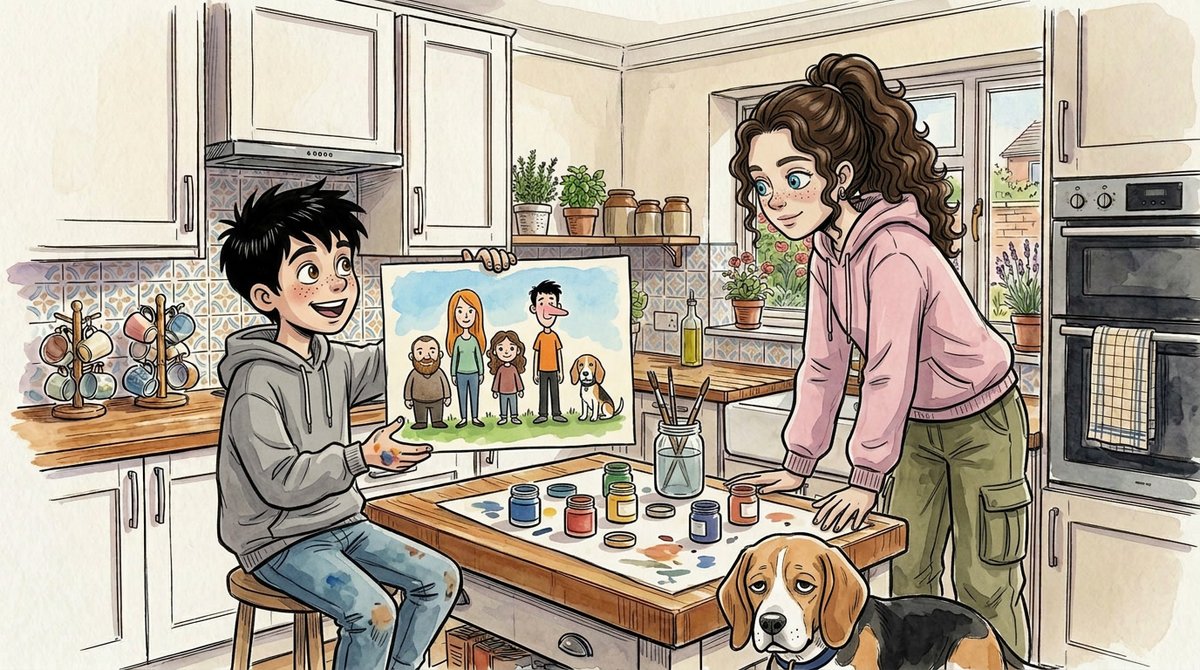
George's family portrait. George paints the whole Walker family for his penpal, and spiky sister Rosie corrects every wonky detail — until Buster leaves paw prints across the wet paint.
Episode worksheets (2)
- Student sheet In your teacher account
- Teacher sheet In your teacher account
Teaching guide
Objective & content
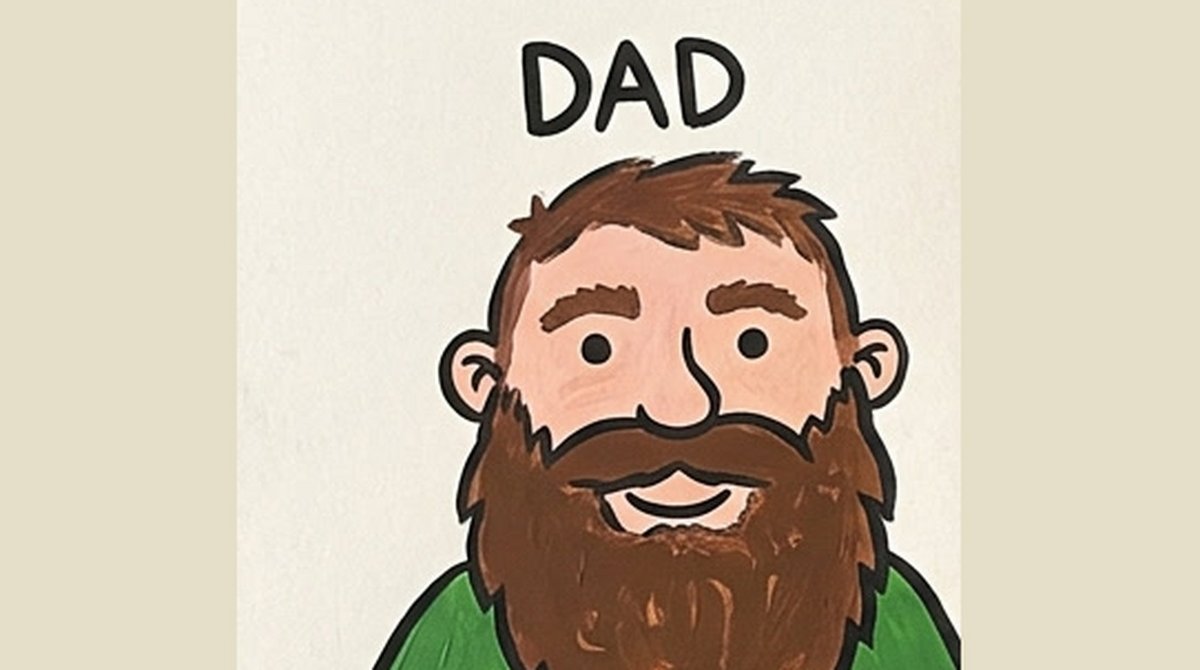
George paints a family portrait for his penpal Tom, and his sister Rosie points out the mistakes: Dad is tall, Mum's eyes are blue, and George's nose is not small. Buster's paws finish the picture. The episode teaches description with be for height (Dad is tall.) and have for features (Dad has a beard and short hair.). The vocabulary is appearance: hair, eyes, nose, beard and colours. Learners listen, then check their understanding with the in-app quiz.
Pedagogical guide
The two verbs split the work: be for height and have for features. French, Italian and Spanish learners over-use have, so contrast I am tall with I have brown hair. The negative is modelled too: No, I don't have a big nose! Let pupils practise I don't have with features.
Suggested procedure
- (3 min) Warm-up: describe a pupil in the class and let others guess who it is.
- (2 min) Introduce George and Rosie; preview the body and hair words.
- (4 min) First listen: what is George painting, and what does Rosie correct?
- (8 min) Second listen: pupils note each mistake in the painting and give the right description.
- (7 min) Board work: be + tall / short and have + beard / hair / eyes; sort the script lines.
- (6 min) Pupils draw a family member and describe the drawing to a partner.
Materials & prerequisites
The episode in the PLAY app (audio, slideshow, text and quiz), a student sheet and a teacher sheet with the answer key. Learners need colours and the family words.
Curriculum alignment
Cycle 3 (6e), axis "The child and their close environment": describing people.
Possible adaptations
- Lower levels: Offer segmented listening and additional visual aids.
- Advanced levels: Encourage an oral summary and a debate in English on the theme.
- Large groups: Organise group work with differentiated roles.
🔒 Restricted content
This resource requires a subscription to be viewed.
Unlock the resourceIncluded in the subscriptionTags
- Journey (dialogue)
- Be (affirmative)
- Adjectives: basics
- Physical description
- Body parts
- Child and close environment
- Listening comprehension
- Vocabulary building
- Grammar practice
- Family
- Belonging & Home