S2 Halloween - Don't Say My Name
Episode of the series Meet My Family
- Illustrated slideshow (42 images)
- Glossary (11 words)
- Comprehension quiz (15 questions)
 Extract · 30 s
The episode
Trick-or-treat rules; must / mustn't (obligation and prohibition)
Episode worksheets (2)
- Student sheet In your teacher account
- Teacher sheet In your teacher account
Teaching guide
Objective & content
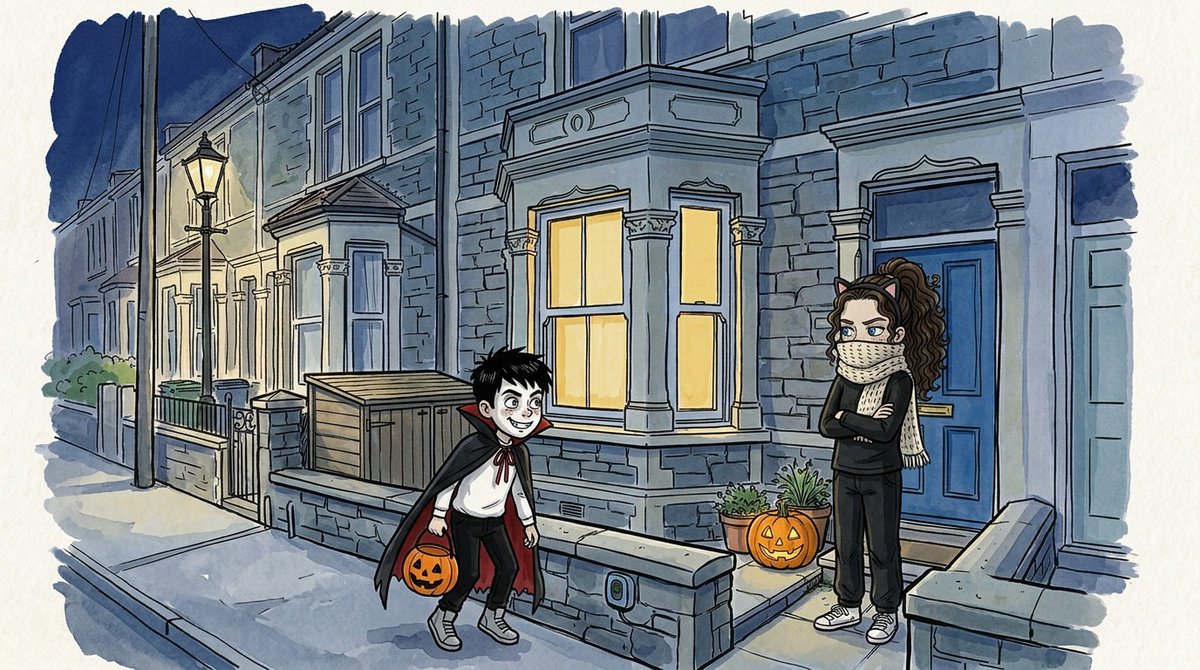
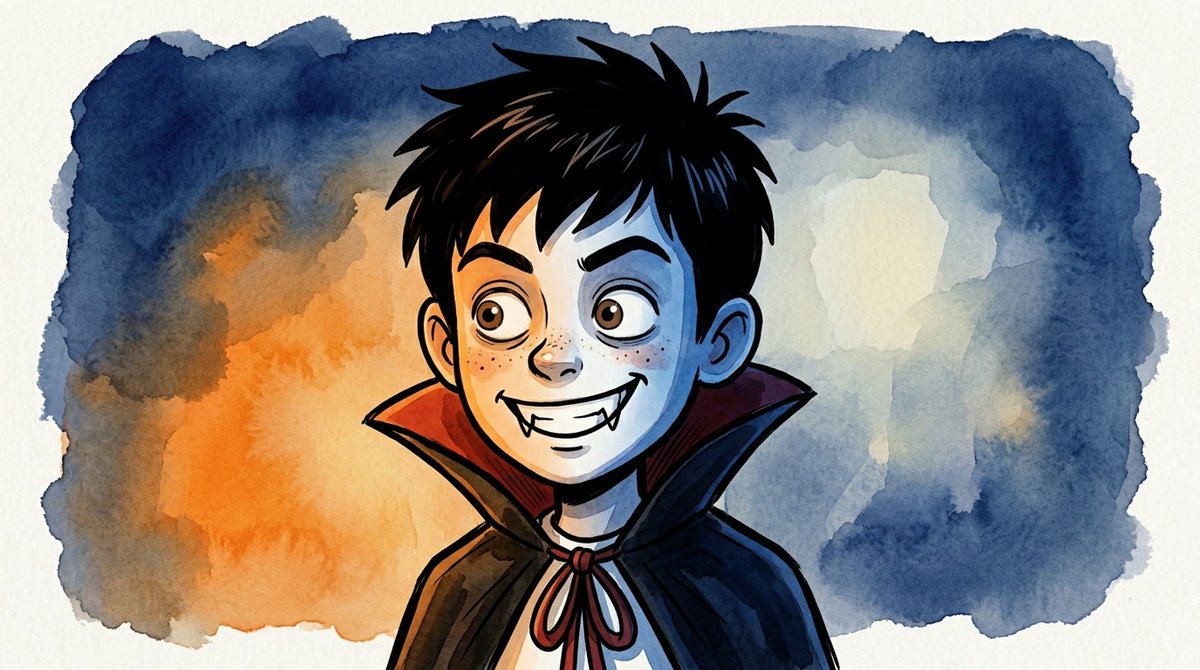
George and Rosie go trick or treating on their street for the first time without a parent: Mum says they must stay together, and Rosie, fourteen and embarrassed in her cat costume, adds a rule of her own. Along the way she explains the custom (a pumpkin on the doorstep means yes, take only one sweet), and George breaks each rule, until he rings the bell of Lucas, the boy next door. The grammar is must for obligation (We must stay together.) and mustn't for prohibition (You mustn't say my name.), with the imperative giving a rule directly (Put the rest back.). The vocabulary covers Halloween and the street (pumpkin, sweets, handful, bell, next door) and feelings words such as embarrassing and greedy. Learners listen, then check their understanding with the in-app quiz.
Materials & prerequisites
The episode in the PLAY app (audio, slideshow, text and quiz), a student sheet and a teacher sheet with the answer key. Learners need the present simple and the imperative. Watch mustn't: French pupils often read it as don't have to, so every mustn't in the episode is a clear ban, and don't have to never appears.
Curriculum alignment
Cycle 4 (5e), axis "Encountering others": a Halloween custom and its rules, and meeting the boy next door.
Possible adaptations
- Lower levels: Offer segmented listening and additional visual aids.
- Advanced levels: Encourage an oral summary and a debate in English on the theme.
- Large groups: Organise group work with differentiated roles.
🔒 Restricted content
This resource requires a subscription to be viewed.
Unlock the resourceIncluded in the subscriptionTags
- Journey (dialogue)
- Must: obligation
- Mustn't: prohibition
- Birthdays & parties
- Feelings & emotions
- Halloween
- Encountering others
- Listening comprehension
- Vocabulary building
- Grammar practice
- Family
- Belonging & Home