S1 Halloween - Who's at the Door?
Episode of the series Meet My Family
- Illustrated slideshow (29 images)
- Glossary (9 words)
- Comprehension quiz (14 questions)
 Extract · 30 s
The episode
Halloween costume nouns; be + noun in questions and negatives (Is it a...? / It's a... / It isn't a...)
Episode worksheets (2)
- Student sheet In your teacher account
- Teacher sheet In your teacher account
Teaching guide
Objective & content
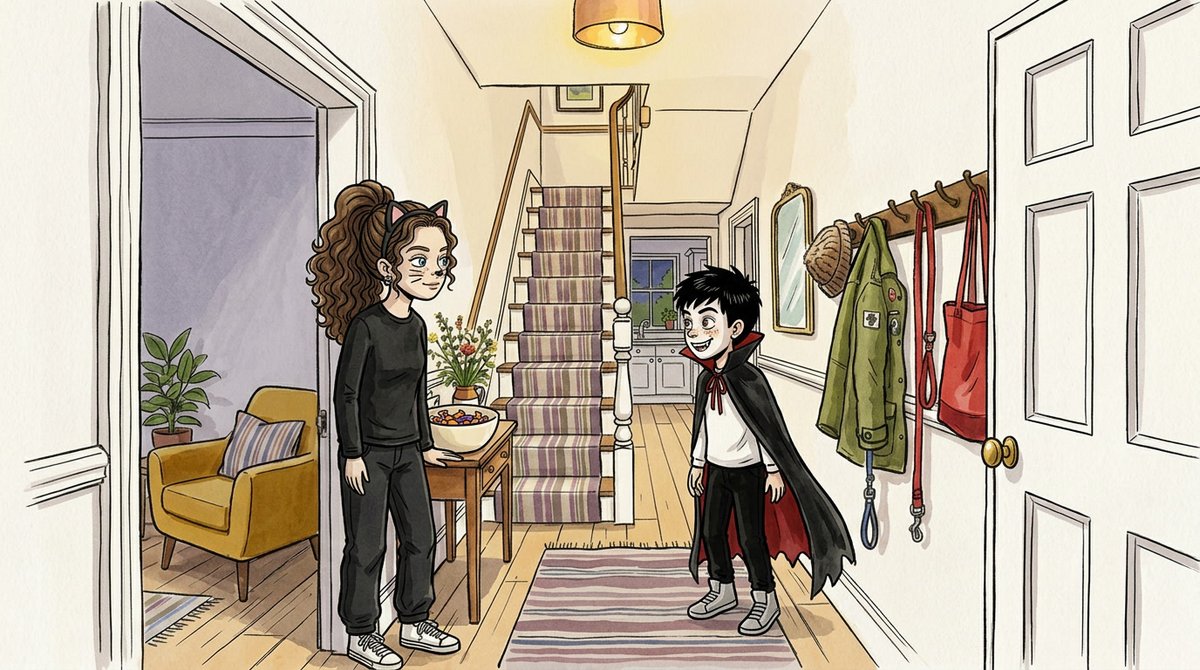
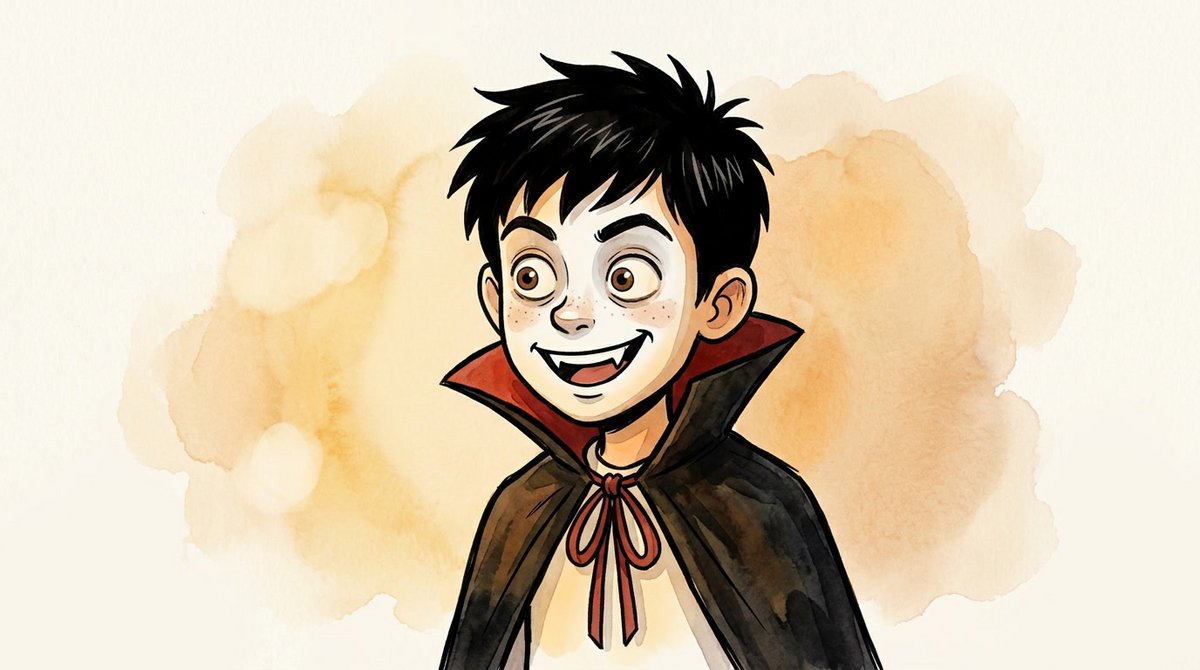
On Halloween evening, George (dressed as a vampire) and his sister Rosie (a black cat) answer the door to trick-or-treaters, but George has eaten most of the sweets and keeps giving away too many. Each time the doorbell rings, they guess which costume is outside, until a very small white ghost with a tail turns out to be Buster the dog, back from the shop with Dad. The grammar is be with a noun to say who or what something is: the question (Is it a witch?), the affirmative (It's a skeleton.) and the negative (No, it isn't a ghost.). The vocabulary is Halloween costumes (vampire, witch, ghost, skeleton), with the colours black and white revised. Learners listen, then check their understanding with the in-app quiz.
Materials & prerequisites
The episode in the PLAY app (audio, slideshow, text and quiz), a student sheet and a teacher sheet with the answer key. Learners need the colours and the verb have. Watch the article: French and German pupils tend to drop a under time pressure, so the episode keeps it in every question and answer.
Curriculum alignment
Cycle 3 (6e), axes "Child and close environment" and "Child and imagination": Halloween at home, costumes and guessing who is at the door.
Possible adaptations
- Lower levels: Offer segmented listening and additional visual aids.
- Advanced levels: Encourage an oral summary and a debate in English on the theme.
- Large groups: Organise group work with differentiated roles.
🔒 Restricted content
This resource requires a subscription to be viewed.
Unlock the resourceIncluded in the subscriptionTags
- Journey (dialogue)
- Be (affirmative)
- Question forms
- Birthdays & parties
- Colours
- Halloween
- Child and close environment
- Child and imagination
- Listening comprehension
- Vocabulary building
- Grammar practice
- Family
- Belonging & Home