S1E23 - Getting Around Town
Episode of the series Meet My Family
- Illustrated slideshow (18 images)
- Glossary (12 words)
- Comprehension quiz (15 questions)
 Extract · 30 s
The episode
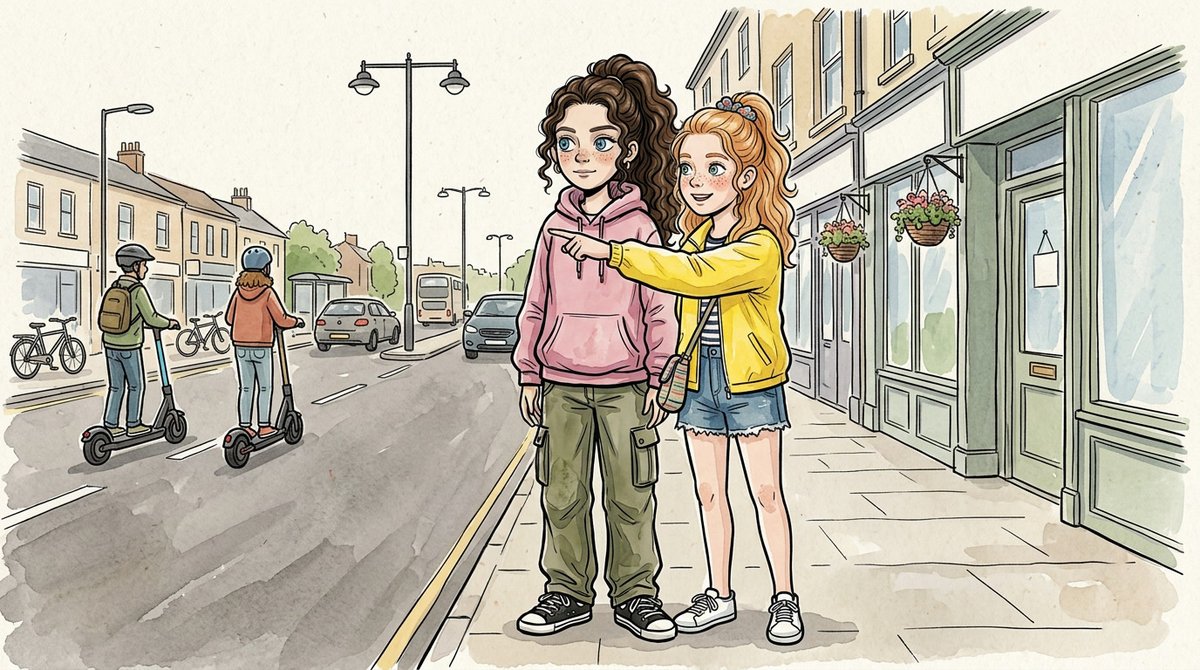
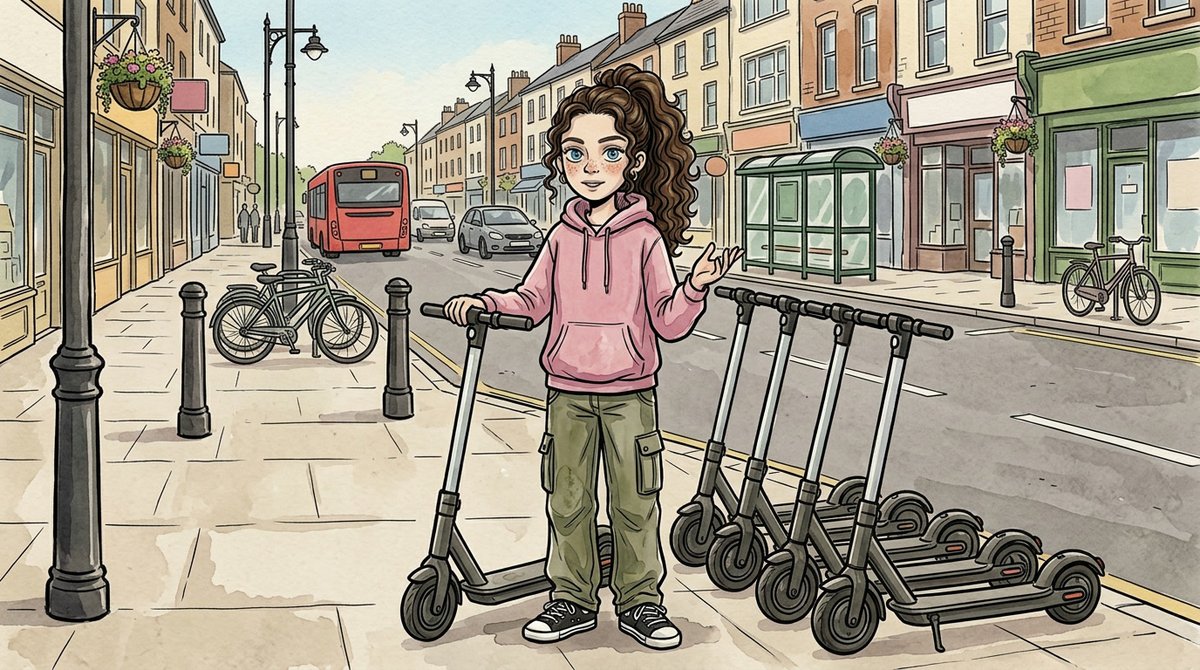
How Do You Get There?. Amber takes the Tube. Rosie rides her bike. How does everyone get around town?
Episode worksheets (2)
- Student sheet In your teacher account
- Teacher sheet In your teacher account
Teaching guide
Objective & content
Rosie and Amber, who is visiting from London, walk into town past electric scooters. Amber takes the Tube every day, Rosie rides her bike (and gets the bus when it rains), and Rosie's mum drives her car. A lorry interrupts them at the end. The episode teaches the present simple for habits (I take the Tube every day., Mum drives her car.) and the question How do you usually get to school?. The vocabulary is transport: scooter, bike, bus, car, lorry, Tube, underground, train, traffic. Learners listen for the three journeys, then check their understanding with the in-app quiz.
Pedagogical guide
English pairs a different verb with nearly every vehicle, so the difficulty is the verb, not the noun. French and German pupils use one structure for most journeys (en bus, mit dem Bus fahren) and Italian pupils may say I go in bike or I take the bike. The third person (How does she get to work?) appears in the script and is noted, not taught in depth.
Suggested procedure
- (5 min) Warm-up: count by show of hands how pupils came to school today and keep the tally on the board.
- (8 min) Teach the twelve words in groups; let pupils hear Rosie ask what the Tube is rather than pre-teaching it.
- (7 min) First listen: how do Amber, Rosie and Rosie's mum get around?
- (10 min) Second listen: pupils write the verb in front of each vehicle (take, ride, get, drive) and say why it is not the same verb every time.
- (8 min) Grammar focus: take apart How do you usually get to school? and build three more questions on the same frame.
- (7 min) Class survey: each pupil asks three classmates How do you get to school? and a group reporter gives the totals.
Materials & prerequisites
The episode in the PLAY app (audio, slideshow, text and quiz), a student sheet and a teacher sheet with the answer key. Learners need the present simple with I and you, and the question What do you ...?.
Curriculum alignment
Cycle 3 (6e), axis "The child and their close environment": getting around town.
Possible adaptations
- Lower levels: Offer segmented listening and additional visual aids.
- Advanced levels: Encourage an oral summary and a debate in English on the theme.
- Large groups: Organise group work with differentiated roles.
🔒 Restricted content
This resource requires a subscription to be viewed.
Unlock the resourceIncluded in the subscriptionTags
- Journey (dialogue)
- Present simple
- Transport
- Child and close environment
- Listening comprehension
- Vocabulary building
- Grammar practice
- Travel & transport
- Places & Journeys