S1E02 - When's Your Birthday?
Episode of the series Meet My Family
- Illustrated slideshow (15 images)
- Glossary (12 words)
- Comprehension quiz (14 questions)

 Extract · 30 s
The episode
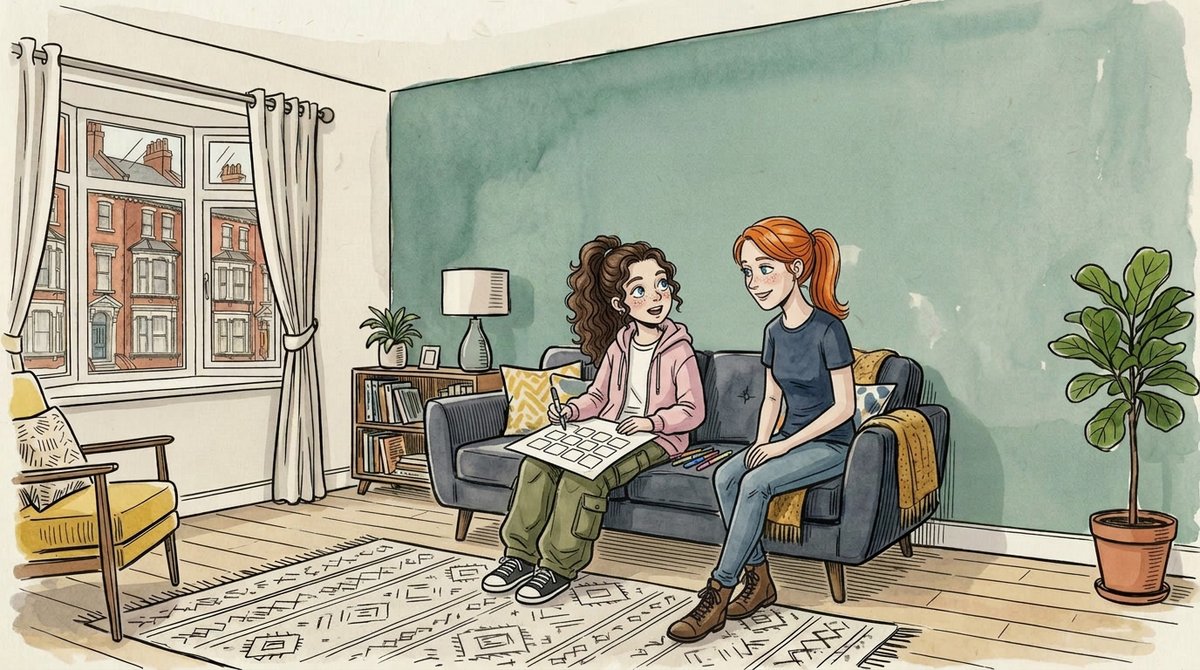
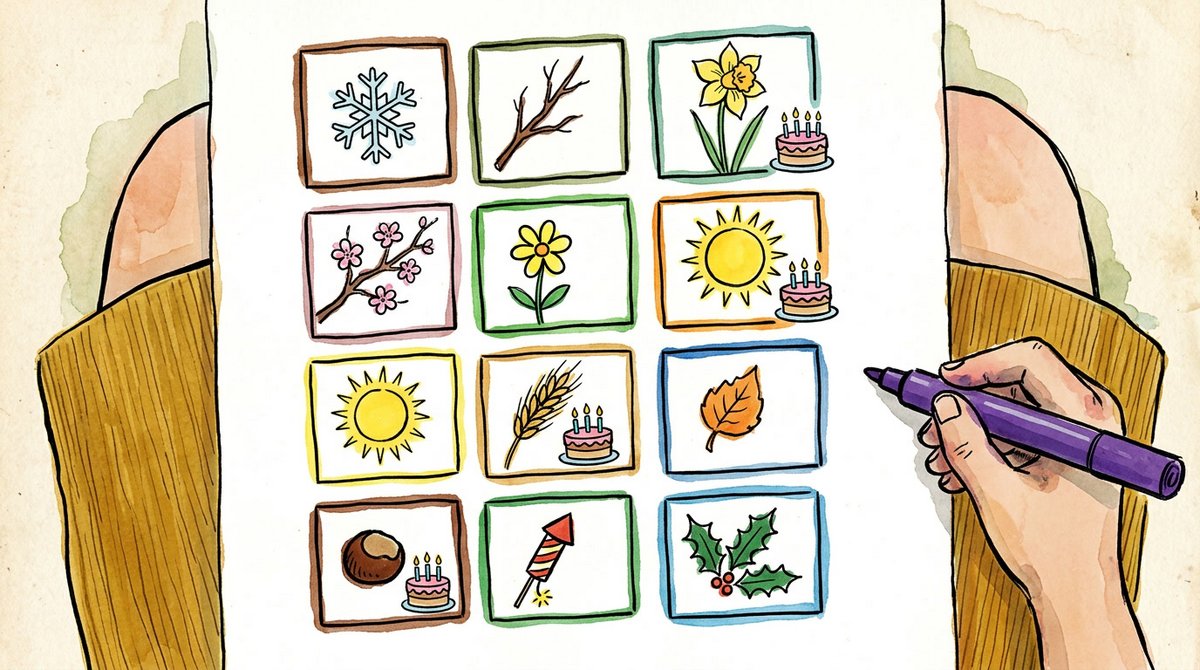
Rosie's family birthday calendar. Rosie knows every birthday by heart — Mum can't even remember her own, until the calendar (and Rosie) save the day. The dog's birthday is the punchline.
Episode worksheets (2)
- Student sheet In your teacher account
- Teacher sheet In your teacher account
Teaching guide
Objective & content
Rosie is making a family birthday calendar. She knows every date by heart, while her mum Kate forgets even her own birthday; the last date is the dog's. The episode teaches time markers and dates: in with a month or a season (Mine's in summer), the ordinal date (the fifth of November) and the question When's George's birthday? The vocabulary field is months, seasons and ordinal numbers. Learners listen for each date, then check their understanding with the in-app quiz.
Pedagogical guide
The dialogue is short, so there is time to work on the one hard point: the ordinal plus of (the fifth of November). French learners say le 5 novembre with a cardinal number and no of, and they write months with a small letter; English months take a capital.
Suggested procedure
- (3 min) Warm-up: write When's your birthday? on the board, ask five or six pupils and group their months by season.
- (2 min) Preview birthday, calendar, month, season and autumn.
- (4 min) First listen: what is Rosie making, and who forgets a birthday?
- (8 min) Second listen: pause after each date and ask which month and which season.
- (7 min) Board work: in + month or season and the + ordinal + of + month; drill aloud.
- (6 min) Pairs ask When's your birthday? and answer with a month and a date.
Materials & prerequisites
The episode in the PLAY app (audio, slideshow, text and quiz), a student sheet and a teacher sheet with the answer key. Learners need the months, the numbers to thirty-one and the verb be.
Curriculum alignment
Cycle 3 (6e), axis "The child and passing time": birthdays, months and seasons.
Possible adaptations
- Lower levels: Offer segmented listening and additional visual aids.
- Advanced levels: Encourage an oral summary and a debate in English on the theme.
- Large groups: Organise group work with differentiated roles.
🔒 Restricted content
This resource requires a subscription to be viewed.
Unlock the resourceIncluded in the subscriptionTags
- Journey (dialogue)
- Prepositions of place and time
- Question words
- Be (affirmative)
- Months
- Seasons
- Ordinal numbers
- Child and passing time
- Listening comprehension
- Vocabulary building
- Grammar practice
- Seasons & festivals
- Family
- Everyday Life
- Belonging & Home