S1E06 - Rosie's Busy Week
Episode of the series Meet My Family
- Illustrated slideshow (14 images)
- Glossary (7 words)
- Comprehension quiz (16 questions)

 Extract · 30 s
The episode
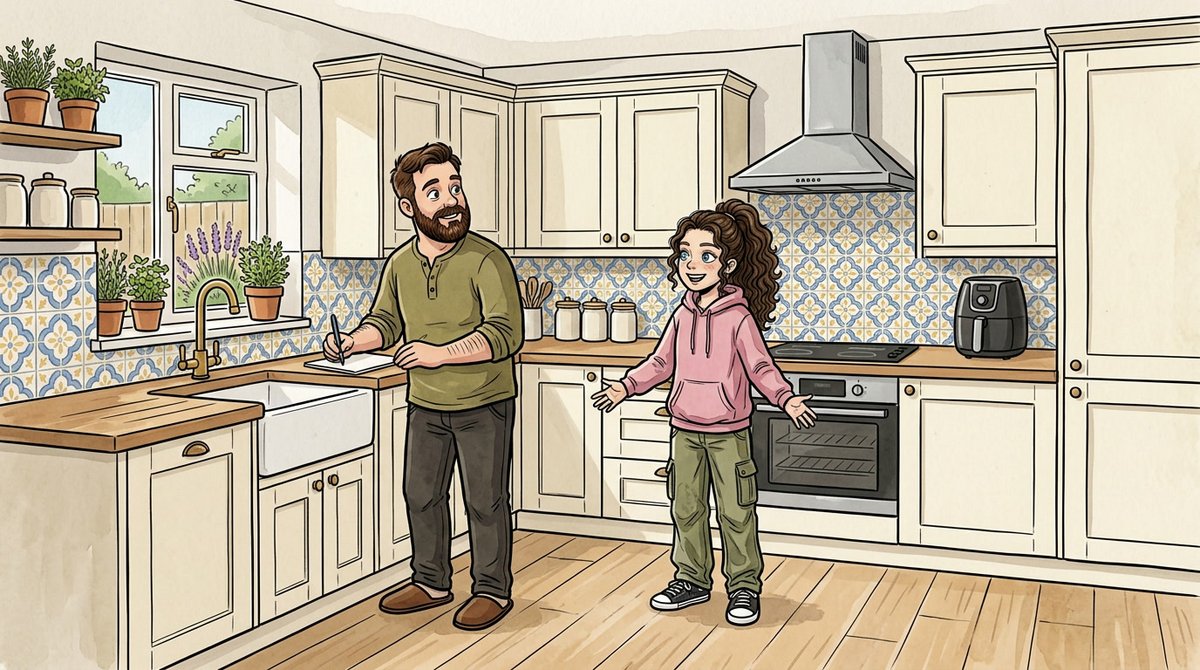
Who drives who?. Dad tries to keep up as organised, super-busy Rosie reels off her jam-packed week — netball twice, piano, homework club, a concert — and it turns out she works harder than he does.
Episode worksheets (2)
- Student sheet In your teacher account
- Teacher sheet In your teacher account
Teaching guide
Objective & content
Paul asks his daughter Rosie what is on this week so he knows when to drive her. She has netball on Monday and Wednesday, piano on Tuesday, homework club on Thursday, friends on Friday and a piano concert on Saturday. The episode teaches the present simple for a weekly routine with on and a day (On Monday I have netball after school.), and be with free and busy (On Friday I'm free.). The vocabulary is days of the week, after-school activities and daily routine. Learners listen, then check their understanding with the in-app quiz.
Pedagogical guide
The episode is a list, so the pattern repeats until it sticks. The present simple is the tense of habit: I see my friends means every week, not right now. French, German and Italian learners also need on before a day and a capital letter for each day.
Suggested procedure
- (3 min) Warm-up: ask pupils what they do after school on Mondays and Tuesdays, and write the days on the board.
- (2 min) Preview the days and the activity words (netball, piano, homework club).
- (4 min) First listen: who is talking, and why does Dad ask?
- (8 min) Second listen: pupils fill in Rosie's week, day by day.
- (7 min) Board work: on + day and the present simple for habit; check capital letters and on before each day.
- (6 min) Pairs describe their own week: On Monday I ...
Materials & prerequisites
The episode in the PLAY app (audio, slideshow, text and quiz), a student sheet and a teacher sheet with the answer key. Learners need the numbers one to ten and the verbs have and be.
Curriculum alignment
Cycle 3 (6e), axis "The child and passing time": the days of the week and a weekly routine.
Possible adaptations
- Lower levels: Offer segmented listening and additional visual aids.
- Advanced levels: Encourage an oral summary and a debate in English on the theme.
- Large groups: Organise group work with differentiated roles.
🔒 Restricted content
This resource requires a subscription to be viewed.
Unlock the resourceIncluded in the subscriptionTags
- Journey (dialogue)
- Present simple
- Prepositions of place and time
- Days & weeks
- Daily routine
- Sports
- Child and passing time
- Listening comprehension
- Vocabulary building
- Grammar practice
- Daily routines
- Free time & hobbies
- Everyday Life